Santos Undergoes Major Redevelopment: Traffic Rerouted, Public Transport Adjusted
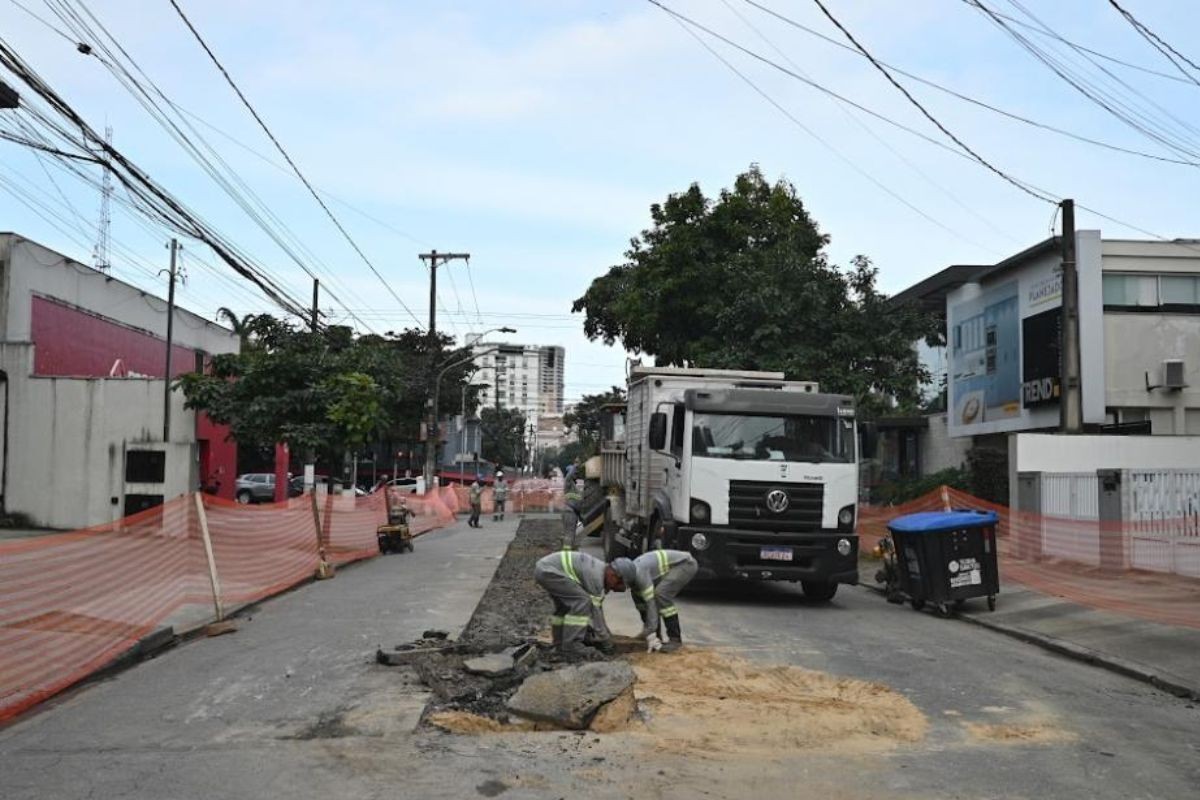
Santos, a coastal city in São Paulo, Brazil, has entered the second phase of a significant urban redevelopment project on Alameda Armênio Mendes in the Aparecida neighborhood. This new phase, commencing Monday, April 3rd, expands the closed-off section up to Rua Primeiro de Maio, necessitating further traffic diversions and the closure of the intersection with Rua Ricardo Pinto. These changes also impact the routes of local and intercity bus lines and introduce new parking restrictions. The city hall anticipates the completion of these extensive works by the end of the second half of the year. The project encompasses the renewal of drainage, water, and sewage systems, along with improvements to paving and landscaping. It also includes the underground installation of electrical, telephone, and internet cables. Temporary traffic signaling for this phase began on Friday, March 31st, with information disseminated through the Waze app. Key modifications from the initial phase include the closure of the Rua Ricardo Pinto and Avenida Epitácio Pessoa intersection. Drivers heading towards the beach on Avenida Coronel Joaquim Montenegro intending to reach Alameda Armênio Mendes are now directed via Avenida Bartolomeu de Gusmão, Rua General Rondon, Avenida Epitácio Pessoa, and Rua Guaibê. An alternative route via Rua Piratininga remains available from Avenida Coronel Joaquim Montenegro towards the beach, though it is suspended on Sundays due to a local market on Rua Ricardo Pinto. New parking restrictions are in effect on sections of Rua General Rondon and Rua Guaibê, while parking has been permitted on Rua Ricardo Pinto between the waterfront and Avenida Epitácio Pessoa. Several bus lines, including municipal routes 8 and 100, and intercity routes 927 and 940, have altered their itineraries in the Centro/beach direction, now traveling via Avenida Coronel Joaquim Montenegro, Avenida Bartolomeu de Gusmão, Rua General Rondon, Avenida Epitácio Pessoa, Rua Primeiro de Maio, before reaching Alameda Armênio Mendes.
The urban redevelopment in Santos highlights the complex interplay between infrastructure improvement and public disruption. While essential for long-term urban vitality, such projects necessitate careful traffic management and clear communication to mitigate immediate impacts on residents and commuters. The phased approach, coupled with real-time information dissemination via apps like Waze, represents a modern strategy to manage these challenges. However, the ongoing adjustments to public transport routes and parking underscore the need for integrated urban planning that anticipates and minimizes inconvenience. Looking ahead, the successful execution of such large-scale projects will increasingly depend on leveraging data analytics to optimize traffic flow and public transit during construction, ensuring that essential services remain accessible and that the benefits of redevelopment are realized with minimal friction for the community.
AI-generated to prompt reflection — not editorial opinion, not advice, not a statement of fact. How this works.
