Sarlahi District Completes 60% of Rice Transplanting by End of Ashad
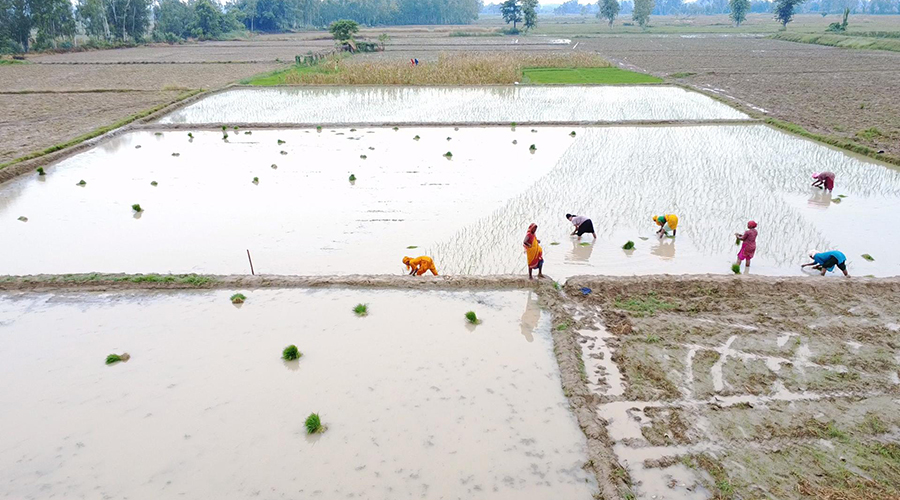
As the month of Ashad concludes, a significant portion of paddy fields in Sarlahi district remain unplanted. The pace of rice transplanting has been slow this year due to a lack of adequate rainfall at the expected time. In contrast, during the same period last year, approximately 70% to 75% of the district's rice cultivation had been completed. This year, only 60% of the fields have undergone transplanting so far. The delay in monsoon rains has directly impacted agricultural activities, raising concerns about potential impacts on the overall paddy yield for the season. Farmers are hoping for improved weather conditions in the coming weeks to accelerate the remaining planting efforts and mitigate potential losses.
The delayed monsoon rainfall in Sarlahi district has demonstrably slowed rice transplanting, impacting agricultural timelines and potentially future yields. This situation highlights the vulnerability of agricultural systems to climatic variations and the critical dependence on predictable weather patterns for food security. As climate change introduces greater volatility, such delays may become more frequent, necessitating adaptive strategies in water management and crop diversification. The contrast with the previous year's progress underscores the immediate impact of environmental shifts on regional agricultural output and farmer livelihoods.
AI-generated to prompt reflection — not editorial opinion, not advice, not a statement of fact. How this works.