Satellite Mega-Constellations Threaten Ground-Based Astronomy
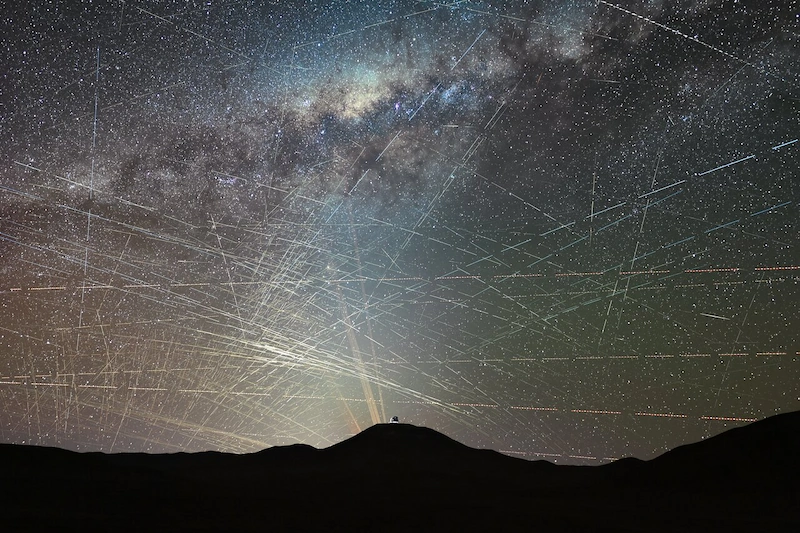
A study by the European Southern Observatory (ESO) warns that current plans for low-Earth orbit satellites are becoming unmanageable. Companies propose launching over 1.7 million satellites, a stark contrast to the 14,000 launched since 2019 (or 32,000 including defunct satellites and space debris). Astronomer Olivier Hainaut's research suggests that to preserve ground-based astronomy, a limit of around 100,000 satellites is reasonable, with each appearing dimmer than visual magnitude 7, making them invisible even in dark skies. SpaceX's StarLink constellation is already impacting observations; some images from Chile's Very Large Telescope may lose up to 28% of their field of view shortly after sunset due to its brightness. A startup named Reflect Orbital plans to launch mirror satellites to illuminate areas at least 5 kilometers wide at night, aiming for 50,000 satellites by 2035, starting with a prototype this year. Simulations indicate a full constellation could increase night sky brightness by three to four times. If a single satellite were to point directly at an observer, it could appear four times brighter than the full moon, posing a significant threat to optical astronomy's viability.
The proliferation of satellite mega-constellations presents a significant challenge to ground-based astronomical observation, potentially diminishing the utility of existing observatories and impacting scientific discovery. The economic incentives driving these large-scale deployments, often focused on global internet access or novel illumination services, appear to outweigh initial considerations for astronomical impact. Future regulatory frameworks may need to balance commercial interests with the preservation of a scientifically valuable night sky, considering the long-term implications for research and public access to astronomical phenomena. The rapid technological advancement in this domain necessitates proactive governance to ensure sustainable use of orbital space and prevent irreversible degradation of observational capabilities.
AI-generated to prompt reflection — not editorial opinion, not advice, not a statement of fact. How this works.