Saturn Appears Stationary in the Sky on July 27
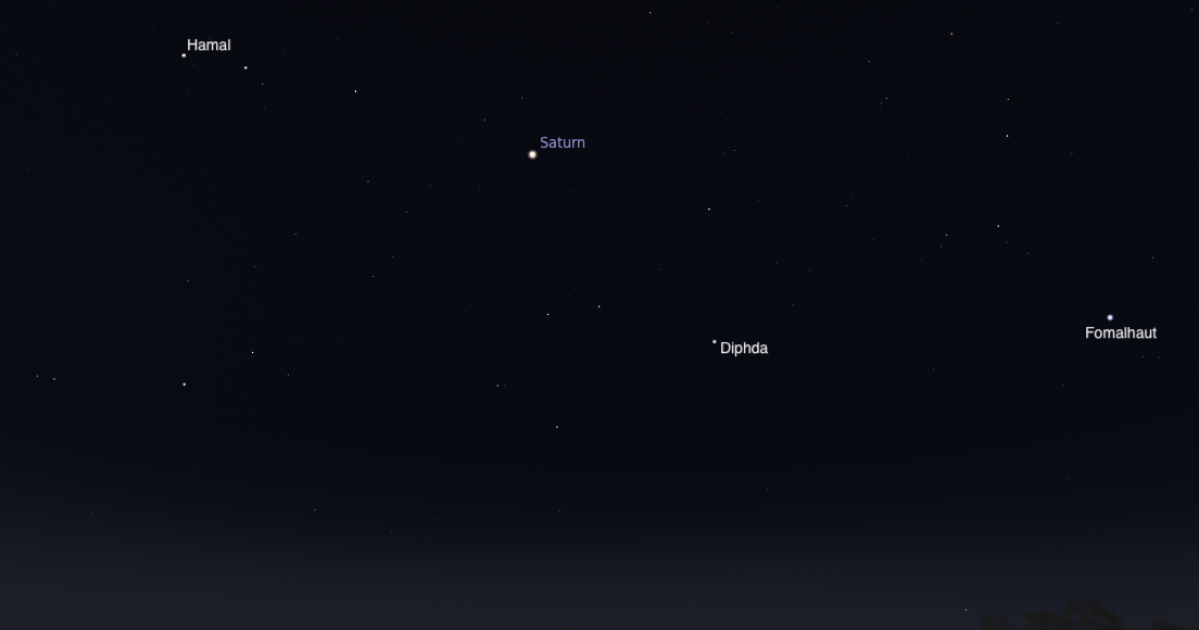
On Monday, July 27, the planet Saturn will appear stationary in the night sky. This celestial event occurs at 7 P.M. EDT when Saturn reaches its stationary point. Currently located within the constellation Pisces, Saturn will be highest in the sky around sunrise. Therefore, the optimal time for stargazers to observe Saturn will be a few hours before dawn. For those interested in more detailed sky-watching information for the week, a "Sky This Week" column is available. This particular observation pertains to the ringed planet and its apparent movement against the backdrop of stars.
The apparent stationary position of Saturn is a predictable astronomical phenomenon resulting from Earth's orbital motion relative to other planets. As Earth overtakes slower-moving outer planets like Saturn in their orbits, the distant planet appears to reverse its direction of motion in the sky from our perspective. This event, known as retrograde motion, is a consequence of orbital mechanics and does not indicate any actual change in Saturn's trajectory. Understanding these orbital dynamics is crucial for accurate astronomical observation and for appreciating the vast scales and movements within our solar system. Future advancements in observational technology may allow for even more detailed study of planetary movements and their underlying physical causes.
AI-generated to prompt reflection — not editorial opinion, not advice, not a statement of fact. How this works.