Saturn's Moons Visible with Telescopes on July 5
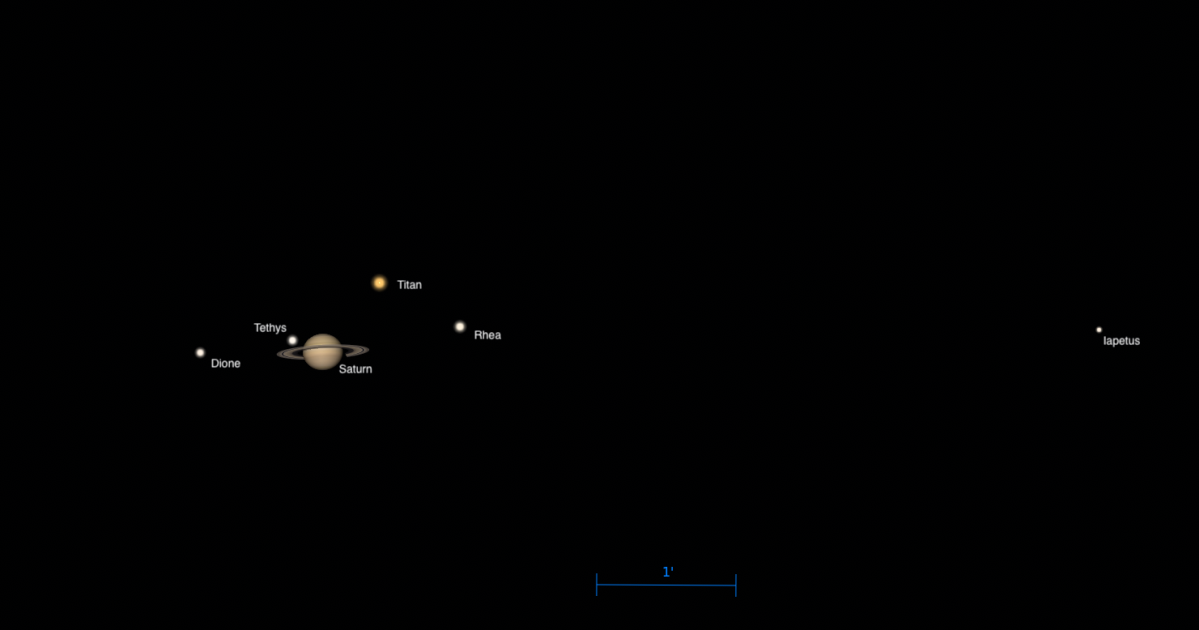
On Sunday, July 5, skywatchers can observe Saturn's largest and brightest moon, Titan, appearing close to its parent planet. Several other of Saturn's moons will also be visible. These celestial sights can be observed using a telescope in the early morning sky. The article references a broader "Sky This Week" column for additional astronomical events occurring during the week. It also notes a conjunction of Mars and Uranus on July 4, though details about this event are not provided in the excerpt.
This astronomical observation highlights the accessibility of celestial bodies with basic telescopic equipment. The event underscores the ongoing public interest in space exploration and astronomy, driven by both scientific curiosity and the desire for personal engagement with the cosmos. As technology advances, such public-facing astronomical events may become more immersive, potentially integrating augmented reality or advanced imaging to enhance the viewing experience for a wider audience. This also points to the enduring appeal of natural phenomena in an increasingly digital world, offering a tangible connection to universal processes.
AI-generated to prompt reflection — not editorial opinion, not advice, not a statement of fact. How this works.