School President Orders Forced Haircuts, Sparks Parent Brawl
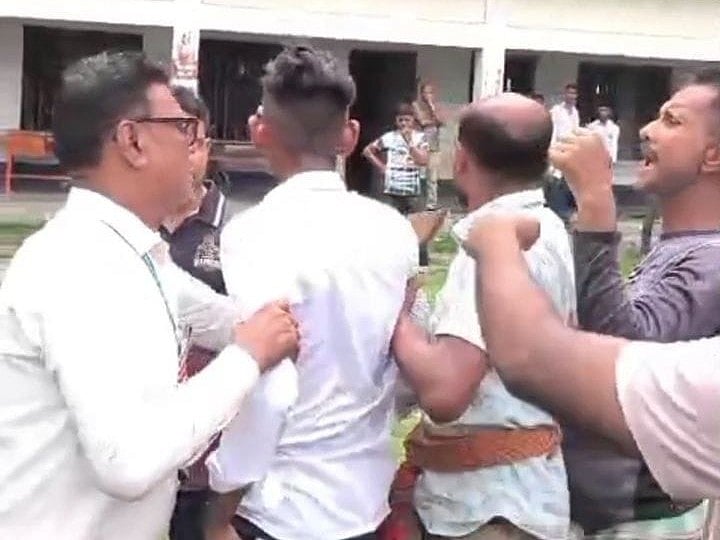
In Jhenaidah's Shailkupa, the president of Kismat Ali Secondary School reportedly ordered students to have their hair forcibly cut by a barber brought into a classroom on Thursday morning. This action led to a physical altercation between the school president and angry parents. The school's managing committee president, Mamunur Rashid, stated that a meeting with parents on Wednesday decided that students with messy hair would have it neatly cut, and those wearing face masks with inappropriate writing would be stopped. He claimed the haircutting followed this decision and was for the school's betterment. However, parents were angered by the president's perceived overreach. Eighth-grader Afreen Hossain reported being among several students called to a classroom and having their hair cut against their will. Another student, Sakin Hossain, confirmed a barber was brought from a nearby market. A parent, Abdul Malek Molla, criticized the president's actions as overly authoritarian. The head teacher, Zahiduzzaman, acknowledged an "undesirable incident" but suggested the president had good intentions and that efforts were underway to resolve the situation. Jhenaidah District Education Officer Lutfor Rahman stated he was unaware of the incident but would investigate, emphasizing that forcing students to get haircuts is legally impermissible.
This incident highlights a potential conflict between administrative authority and parental rights within educational institutions. The school president's actions, though framed as an attempt to improve student discipline and appearance, bypassed established communication channels with parents and students, leading to a breakdown in trust and a physical confrontation. Such top-down directives, particularly when they involve personal appearance and are implemented without clear consent or established policy, can be perceived as overreach. Moving forward, educational governance structures should ensure that disciplinary measures are proportionate, clearly communicated, and align with community expectations and legal frameworks, fostering a collaborative environment rather than one prone to unilateral enforcement.
AI-generated to prompt reflection — not editorial opinion, not advice, not a statement of fact. How this works.