Scientific Seminar Held in Nouakchott on Ethical Corruption and Its Impact on Administration
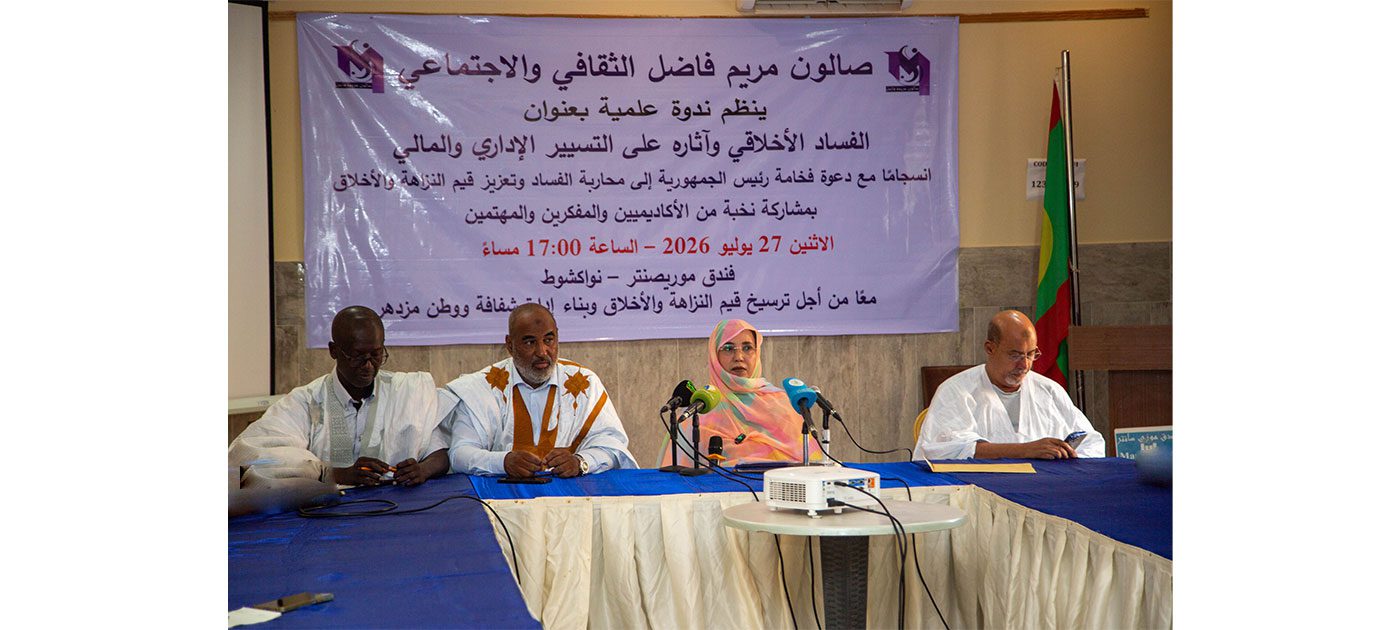
The Mariem Fadel Cultural and Social Salon organized a scientific seminar in Nouakchott on Monday evening. The event, titled 'Ethical Corruption and Its Impact on Administrative and Financial Management,' brought together academics, thinkers, and public affairs stakeholders. This seminar aligns with the call by the President of the Republic, Mohamed Ould Cheikh El-Ghazouani, to combat corruption and promote integrity and ethical values. The head of the salon, Mrs. [Name Redacted], stated that the seminar aims to shed light on the multifaceted nature of ethical corruption and its detrimental effects on both administrative and financial governance. Participants discussed various forms of corruption and their consequences for public trust and institutional effectiveness. The discussions emphasized the importance of transparency, accountability, and robust ethical frameworks in public and private sector management. The seminar sought to foster a deeper understanding of the challenges posed by corruption and to explore potential solutions for its mitigation. The event underscores the growing concern within Mauritania regarding the pervasive influence of corruption on national development and good governance.
This seminar addresses the critical issue of ethical corruption and its systemic impact on administrative and financial management. By framing the event within President El-Ghazouani's anti-corruption initiative, it signals a state-level concern and potential policy direction. The focus on ethical dimensions suggests an acknowledgment that corruption is not solely a legal or financial problem but also a moral and cultural one. Future efforts may benefit from examining the incentive structures that perpetuate unethical behavior and exploring how to strengthen institutional checks and balances. The long-term challenge will be translating these discussions into concrete, enforceable reforms that foster genuine accountability and rebuild public trust in governance.
AI-generated to prompt reflection — not editorial opinion, not advice, not a statement of fact. How this works.