Scientists Capture Eerie Radio 'Scream' of Saturn Before Mission End
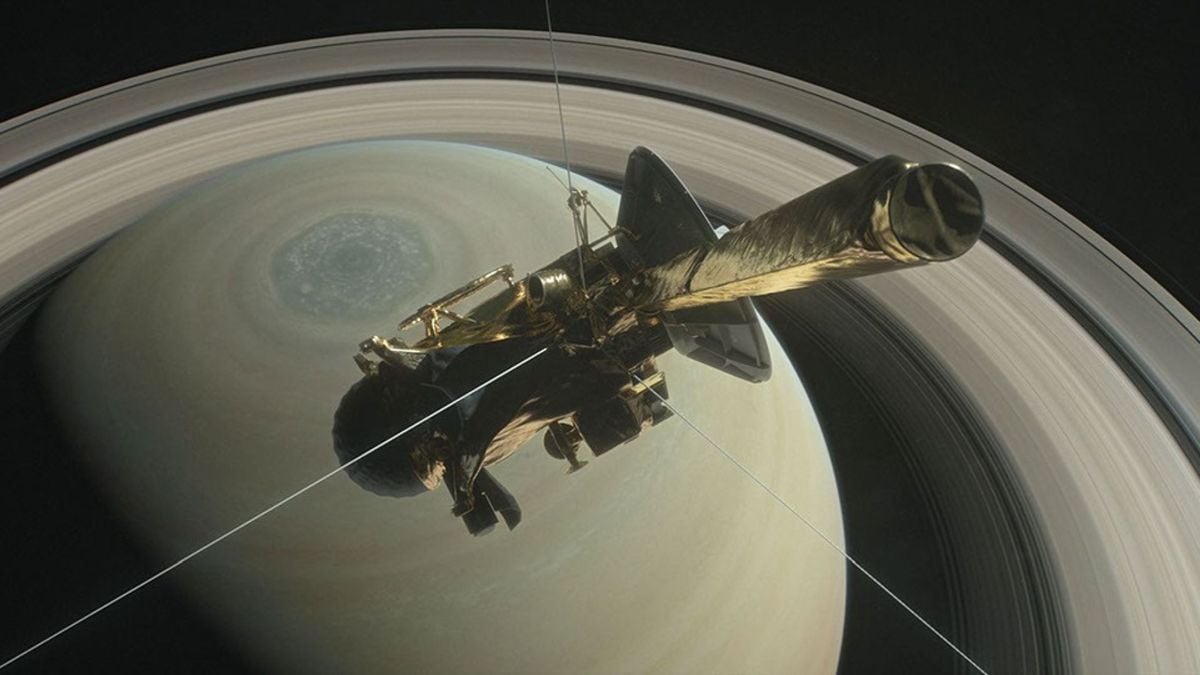
NASA's Cassini spacecraft, before its planned plunge into Saturn's atmosphere on September 15, 2017, captured a unique radio emission described as a 'scream.' This sound was generated by the spacecraft's interaction with Saturn's magnetosphere as it made its final, daring maneuvers. The data collected during this period provided invaluable insights into the planet's magnetic field and atmosphere. Scientists have analyzed these radio waves, which are essentially electromagnetic emissions, to understand the complex dynamics at play within Saturn's environment. The mission concluded after 13 years of exploration, having revolutionized our understanding of the ringed planet and its moons. The 'scream' serves as a final, dramatic data point from a mission that pushed the boundaries of space exploration. This discovery highlights the unexpected ways scientific instruments can capture phenomena, offering a unique auditory perspective on a distant world. The analysis of this final data continues to yield significant scientific findings.
The Cassini mission's final data transmission, including the 'scream' of Saturn's magnetosphere, offers a profound example of scientific discovery through persistent exploration. The event underscores the value of robust data collection even at the conclusion of a mission, highlighting how unexpected phenomena can be captured. Analyzing these radio emissions allows for a deeper understanding of planetary magnetospheres, potentially informing future mission designs and our broader comprehension of celestial bodies. This data also serves as a testament to the engineering prowess required for such long-duration space endeavors and the scientific curiosity that drives them, prompting reflection on the long-term investment in space science and its capacity to reveal the universe's intricacies.
AI-generated to prompt reflection — not editorial opinion, not advice, not a statement of fact. How this works.