Scientists Create Functional Amphibious Cyborg Cockroaches
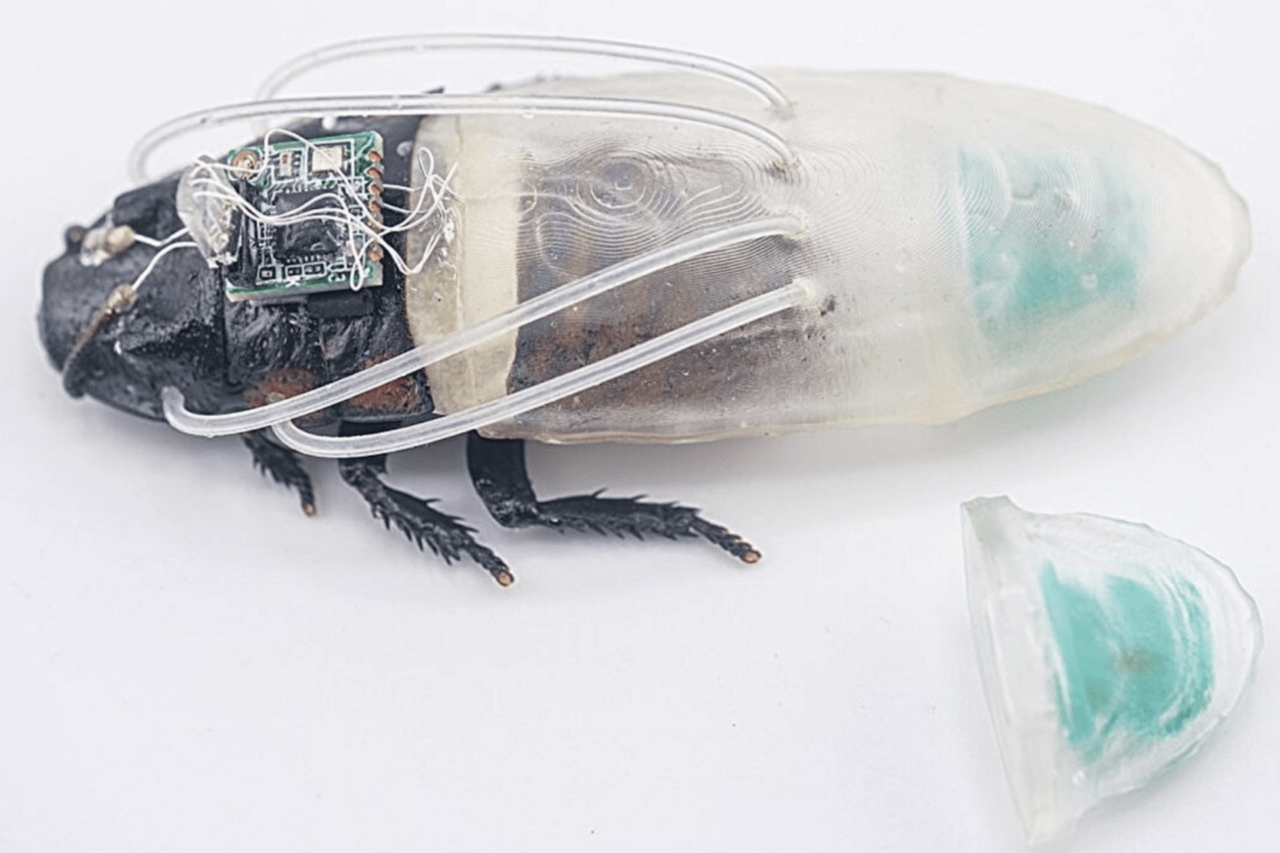
Researchers have successfully engineered amphibious cyborg cockroaches, demonstrating their ability to navigate both land and water environments. These modified insects are equipped with micro-actuators and sensors that allow for remote control and enhanced mobility. The project aims to explore new avenues for bio-integrated robotics and remote sensing capabilities. Future developments are planned, with the team intending to create cyborg locusts next week. This advancement signifies a step forward in merging biological organisms with electronic components for practical applications. The cockroaches' ability to operate in diverse conditions opens up possibilities for their use in search and rescue operations or environmental monitoring. The integration of these cyborg insects highlights the growing field of bio-hybrid systems. The potential applications are vast, ranging from miniature surveillance drones to biological sensors.
The development of amphibious cyborg cockroaches represents a novel intersection of biological engineering and robotics. This technology leverages the inherent resilience and mobility of insects, augmenting them with electronic control systems. The potential applications, such as environmental monitoring or search and rescue, are significant, offering low-cost, adaptable solutions. However, ethical considerations regarding the manipulation of living organisms for technological purposes warrant careful examination. Future research should focus on the long-term welfare of these bio-hybrid systems and the societal implications of widespread deployment. The ability to control living creatures remotely raises questions about autonomy and the definition of life in an increasingly technological world.
AI-generated to prompt reflection — not editorial opinion, not advice, not a statement of fact. How this works.