Scientists Create Synthetic Cell Capable of Growth and Division, But Stop Short of Calling It 'Alive'
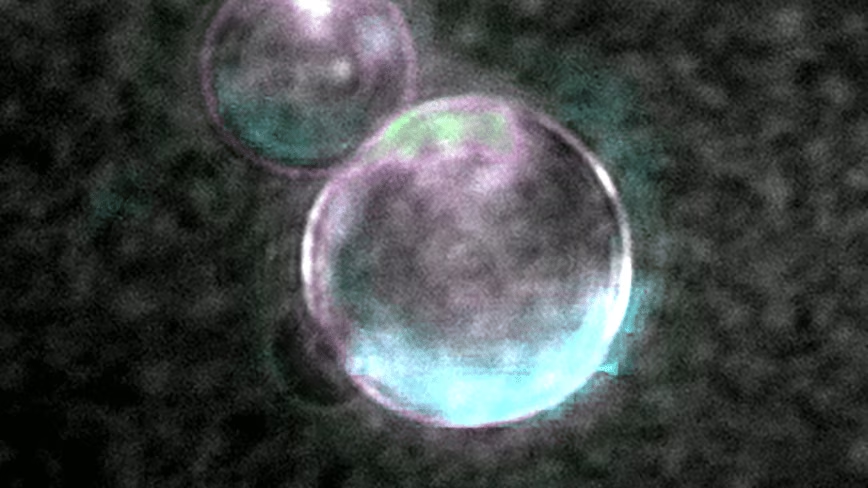
Researchers at the University of Minnesota have successfully constructed a synthetic cell from the ground up, demonstrating capabilities such as feeding, growing, and dividing. This artificial cell even exhibits competitive behavior with its own progeny. Despite these life-like functions, the scientists involved are hesitant to classify their creation as 'alive.' The development, named SpudCell by the team, represents a significant step in blurring the boundaries between non-living chemistry and biological life. This advancement raises profound questions about the definition of life and the potential for artificial biological systems. The implications of creating entities that mimic biological processes without meeting traditional definitions of life are far-reaching. This research pushes the envelope in synthetic biology and artificial life.
This development in synthetic biology challenges conventional definitions of life by creating an entity that performs key biological functions like growth and division. The researchers' decision not to label SpudCell as 'alive' highlights the ongoing debate and the nuanced criteria used to distinguish between complex chemical systems and biological organisms. This advancement could spur further innovation in areas like medicine and materials science, but also necessitates careful consideration of ethical frameworks as artificial life forms become more sophisticated. The long-term impact will depend on how these synthetic systems are regulated and integrated into society, potentially reshaping our understanding of biological systems and our place within them.
AI-generated to prompt reflection — not editorial opinion, not advice, not a statement of fact. How this works.