Scientists Develop Heat-Resistant Chocolate by Modifying Sugar, Fats, and Processes
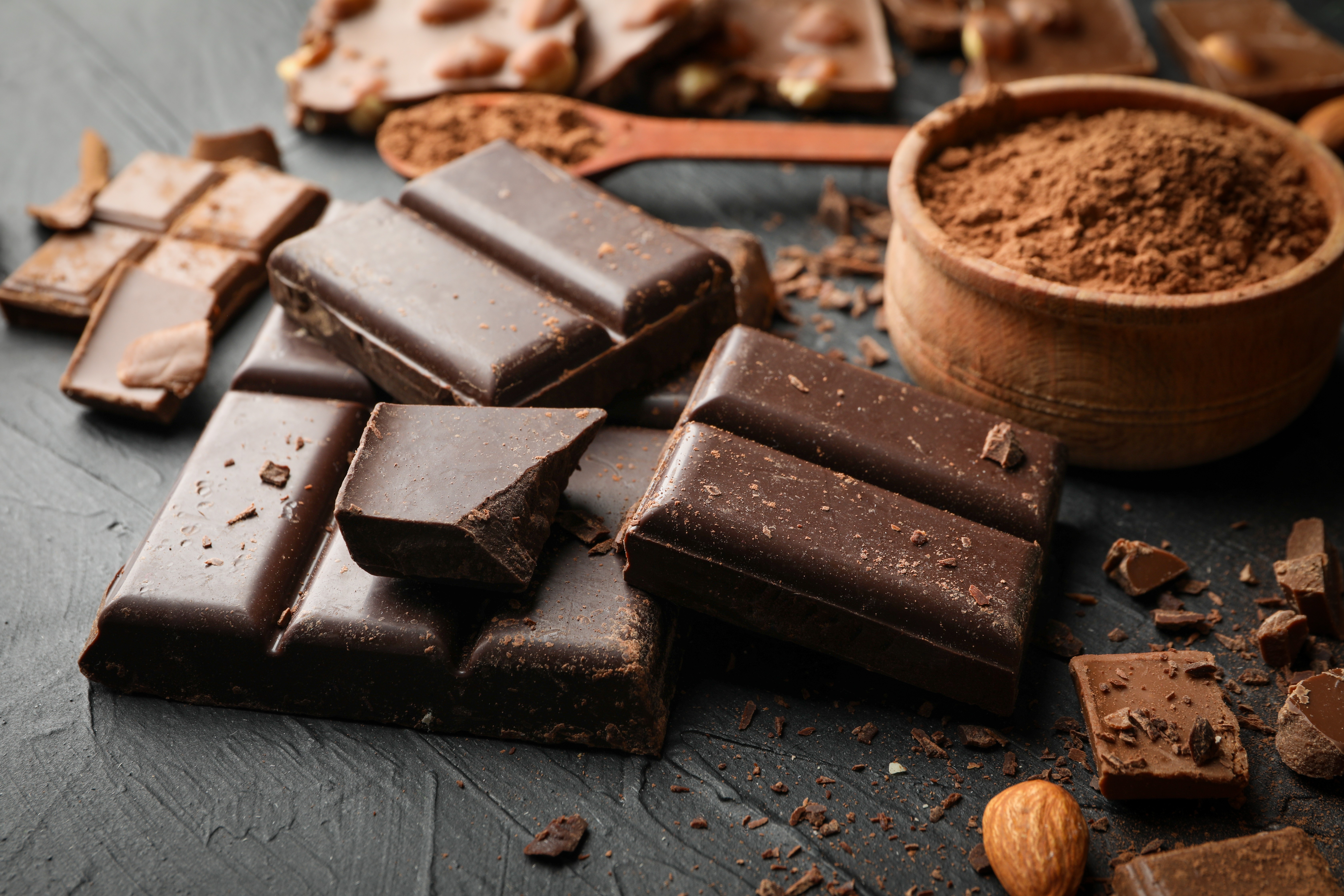
Chocolate's desirable melt-in-your-mouth quality, due to cocoa butter melting near body temperature, also makes it prone to softening in warm climates. To combat this, the food industry and material science have developed heat-resistant chocolates capable of maintaining their form at temperatures between 38 and 45°C, and even higher in experimental formulations. The production of chocolate begins with cocoa beans, which undergo fermentation, drying, and roasting to develop their characteristic aroma and flavor. The roasted beans are ground into cocoa mass, from which cocoa butter and cocoa powder are extracted. Dark chocolate is made by mixing cocoa mass with cocoa butter and sugar, while milk chocolate includes dairy and other ingredients. Refining and conching create a smooth texture, and tempering ensures the cocoa butter crystallizes into its stable form, giving chocolate its gloss, hardness, and clean break.
Several strategies are employed to create heat-resistant chocolate. One approach modifies the sugar microstructure by incorporating small amounts of water or hydrophilic compounds like glycerol or sorbitol. These create a rigid three-dimensional sugar network that supports the chocolate's structure and immobilizes the fat. However, precise water control is crucial to prevent sugar bloom. Another strategy involves altering the fat composition by partially replacing cocoa butter with cocoa butter equivalents (CBEs) like shea butter or palm oil, or with cocoa butter substitutes (CBS) derived from coconut or palm kernel oil. Additionally, cocoa butter improvers (CBIs) can be added to modify the lipid phase and reduce fat bloom, though excessive amounts can lead to a waxy texture. Oleogels and bigels, structured materials that immobilize oils, can also replace cocoa butter to enhance thermal stability.
A more recent scientific approach focuses on modifying the manufacturing process itself, rather than altering ingredients. Optimizing refining and conching can create a more uniform particle size and a denser, more stable microstructure. Mechanical deformation methods, like those used in Cadbury Flake, create layered structures with air bubbles that slow down softening. Despite these advancements, achieving heat resistance often involves trade-offs in texture, melt rate, aroma release, or sensory perception, and formulations must still comply with legal standards for chocolate composition.
The pursuit of heat-resistant chocolate highlights a common tension in food product development: balancing desirable sensory attributes with practical performance requirements. While innovations in sugar microstructure, fat modification, and processing techniques offer solutions to prevent melting in warmer conditions, these often introduce new challenges. For instance, the precise control needed for sugar networks, or the potential for altered mouthfeel from fat substitutes, indicates that a perfect replication of traditional chocolate's sensory profile while achieving superior heat resistance remains an ongoing scientific and engineering challenge. Future research may focus on bio-inspired structures or advanced material science to create chocolates that are both functionally robust and sensorially appealing, potentially leveraging advancements in nanotechnology or encapsulation to deliver flavor and texture independently of melt point.
AI-generated to prompt reflection — not editorial opinion, not advice, not a statement of fact. How this works.