Scientists Discover Unexpected Iron Behavior at Earth's Core
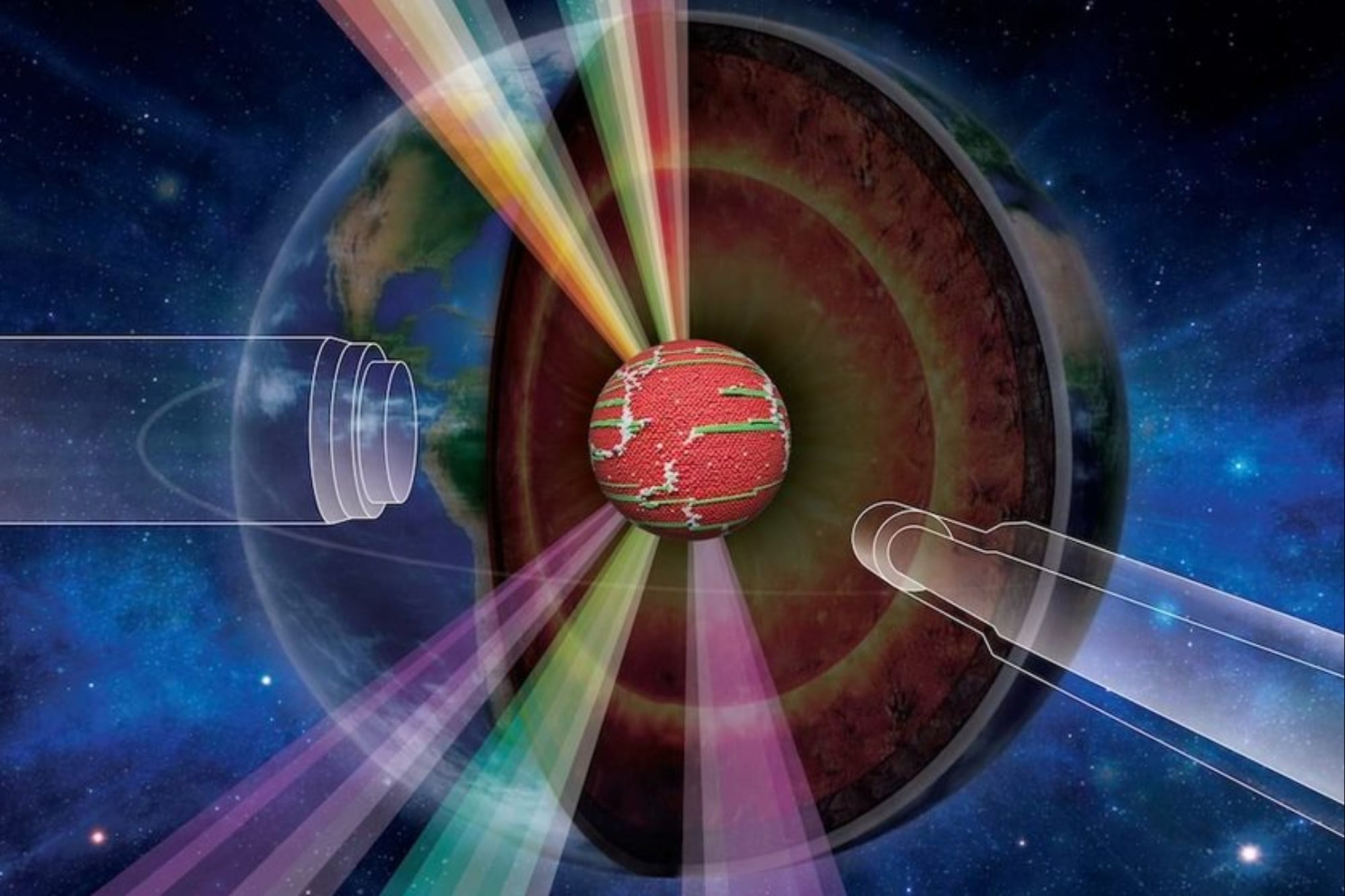
Researchers from Argentina's National Scientific and Technical Research Council (Conicet), alongside other scientists, have revealed surprising new information about the behavior of iron at the Earth's core. This groundbreaking study offers fresh insights into the origins of our planet's magnetic field. It also sheds light on the speed of seismic waves traveling through the Earth's interior. Furthermore, the findings contribute to a better understanding of the evolutionary processes of other rocky planets in our solar system and beyond. The research aims to deepen our comprehension of fundamental geophysical phenomena.
This research into the Earth's core provides a scientific lens on planetary dynamics, moving beyond speculative models. Understanding the behavior of iron under extreme pressure and temperature is crucial for refining geophysical models of planetary formation and evolution. The findings could influence future research into exoplanet habitability, particularly for rocky planets. By clarifying seismic wave propagation and magnetic field generation, this work contributes to a more robust framework for planetary science, enabling more accurate predictions about internal planetary structures and their long-term stability.
AI-generated to prompt reflection — not editorial opinion, not advice, not a statement of fact. How this works.