Scientists Discover Universe's Missing Ordinary Matter After Decades-Long Search
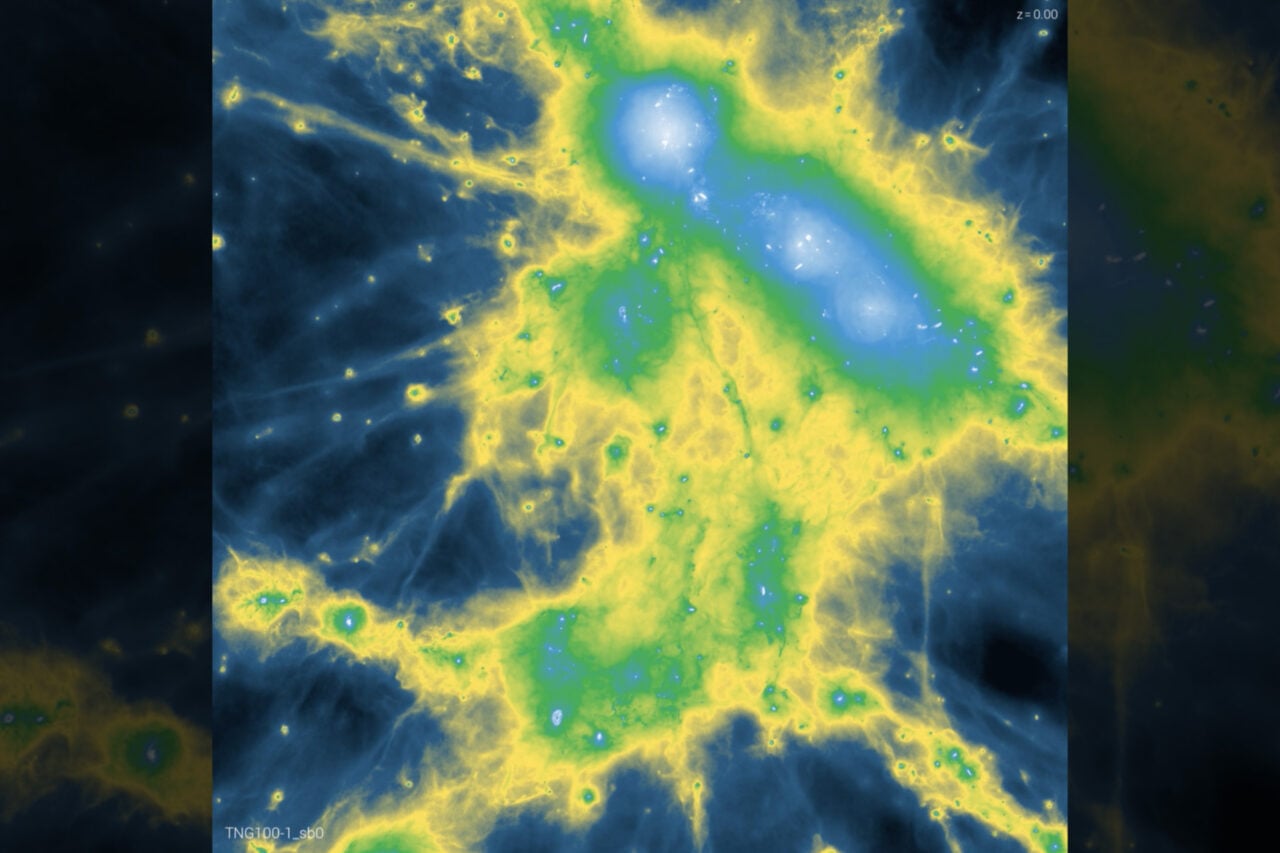
Astronomers have finally located the vast majority of the universe's missing 'ordinary' matter, a discovery that resolves a decades-long cosmic puzzle. This elusive matter, known as baryonic matter, comprises the atoms that make up stars, planets, and ourselves. For years, scientists have been baffled by the discrepancy between the amount of baryonic matter predicted by the Big Bang model and the amount observed in the universe. The missing matter was thought to be spread thinly in the vast cosmic voids between galaxies, making it incredibly difficult to detect. Researchers utilized a combination of observations from multiple telescopes, including the European Southern Observatory's Very Large Telescope (VLT) and NASA's Chandra X-ray Observatory. They analyzed the light from distant quasars as it passed through the tenuous gas filaments connecting galaxy clusters. By studying how this light was absorbed and distorted, they were able to map the distribution of the hot, diffuse gas that constitutes the missing baryonic matter. This breakthrough significantly advances our understanding of the universe's composition and evolution.
This discovery addresses a fundamental gap in cosmological models by confirming the distribution of baryonic matter. The challenge in detecting this matter highlights the limitations of current observational techniques for diffuse cosmic structures. Future research will likely focus on refining these methods to better map the universe's composition and potentially uncover other elusive phenomena. Understanding the precise distribution of matter is crucial for refining cosmological simulations and predicting the universe's long-term evolution, especially in the context of ongoing advancements in astrophysics and observational technology.
AI-generated to prompt reflection — not editorial opinion, not advice, not a statement of fact. How this works.