Scientists Explore Gravity Tractor Method to Deflect Asteroids
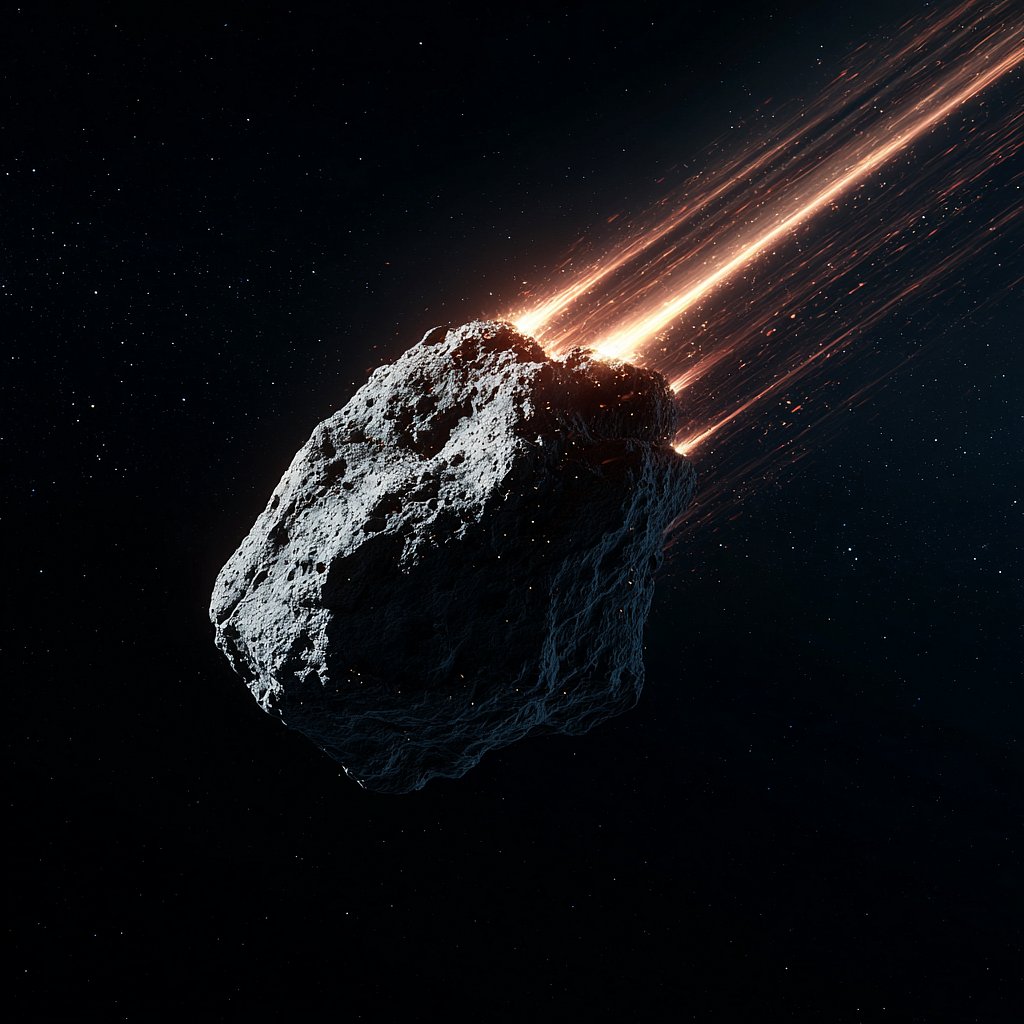
The article discusses the potential threat of asteroid impacts on Earth, drawing parallels to the extinction event that wiped out the dinosaurs approximately 65 million years ago. It highlights the work of the B612 Foundation, a non-profit organization founded in 2002 by former NASA astronaut Ed Lu and Rusty Schweickart. This group of scientists, engineers, and astronauts is dedicated to finding effective strategies to protect humanity from cosmic collisions.
One proposed solution is the 'gravity tractor' method. This technique involves positioning a spacecraft near an asteroid and using its engines to create a continuous thrust. Over years, this gentle, persistent push, amplified by gravitational attraction, can gradually alter the asteroid's trajectory. Unlike explosive methods, the gravity tractor avoids fragmentation risks and is considered safer. However, challenges include precise navigation, the asteroid's own rotation, and the need for significant lead time, ideally 10 to 20 years for smaller objects.
An enhanced version, the 'enhanced gravity tractor,' suggests using robotic arms to collect material from the asteroid itself, increasing the spacecraft's mass and thus its gravitational pull. NASA had planned to test this concept through the Asteroid Redirect Mission, but it was canceled in 2017 due to high costs and political considerations. Scientists are also considering combining multiple gravity tractors or integrating this method with other techniques, such as initial deflection via explosion followed by gravitational nudging, to ensure asteroids are moved safely away from critical 'keyhole' orbits.
The exploration of asteroid deflection technologies like the gravity tractor highlights humanity's proactive approach to existential risks. While the science behind these methods is sound, their practical implementation hinges on sustained international cooperation and long-term investment, often at odds with short-term political and economic cycles. The cancellation of NASA's Asteroid Redirect Mission exemplifies the challenges of funding ambitious, decade-spanning projects. Future success will likely depend on developing robust, adaptable frameworks that can overcome budgetary fluctuations and geopolitical shifts, ensuring that critical planetary defense capabilities are not casualties of immediate priorities. The ongoing development in AI and autonomous systems may offer new avenues for more efficient and cost-effective asteroid mitigation strategies in the coming years.
AI-generated to prompt reflection — not editorial opinion, not advice, not a statement of fact. How this works.