Scientists Identify Brain Circuitry Governing Bee Job Allocation
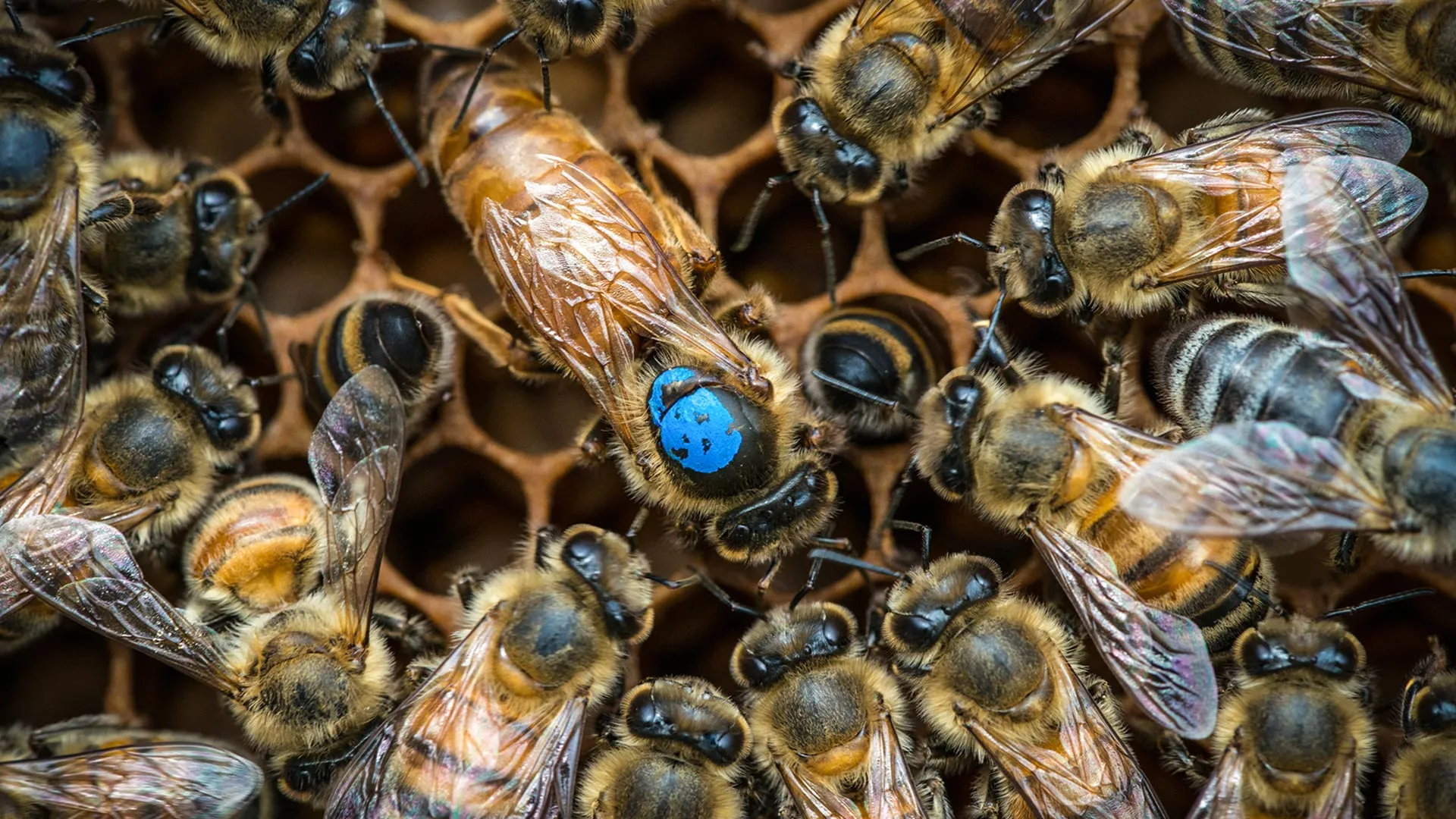
Researchers have identified specific brain circuits in bees that appear to control the division of labor based on age. These neural switches dictate which tasks worker bees undertake as they mature within the colony. Experiments demonstrated that when these particular brain circuits were deactivated, older worker bees reverted to performing tasks typically done by younger bees, such as caring for the queen. This suggests that the sophisticated organization of tasks within a bee colony is not solely driven by external cues but also by internal neural mechanisms. The discovery offers a new perspective on how social insect colonies manage their complex societal structures. It highlights the intricate link between neural activity and behavioral plasticity in these insects. Further research into these brain circuits could illuminate the fundamental principles of social organization and task allocation in biological systems.
This discovery offers a fascinating glimpse into the biological underpinnings of social organization. By identifying specific neural circuits that govern task allocation in bees, researchers are uncovering the intricate interplay between genetics, neural development, and emergent collective behavior. Understanding these mechanisms could have implications for designing more adaptable and efficient distributed systems, whether in robotics or organizational management. It prompts consideration of how similar, perhaps less obvious, neural or algorithmic switches might influence decision-making and task prioritization in more complex biological or artificial intelligences, and how these systems might be modulated for optimal collective function.
AI-generated to prompt reflection — not editorial opinion, not advice, not a statement of fact. How this works.