Scientists Mimic Rotating Bodies for Wave Amplification in Lab
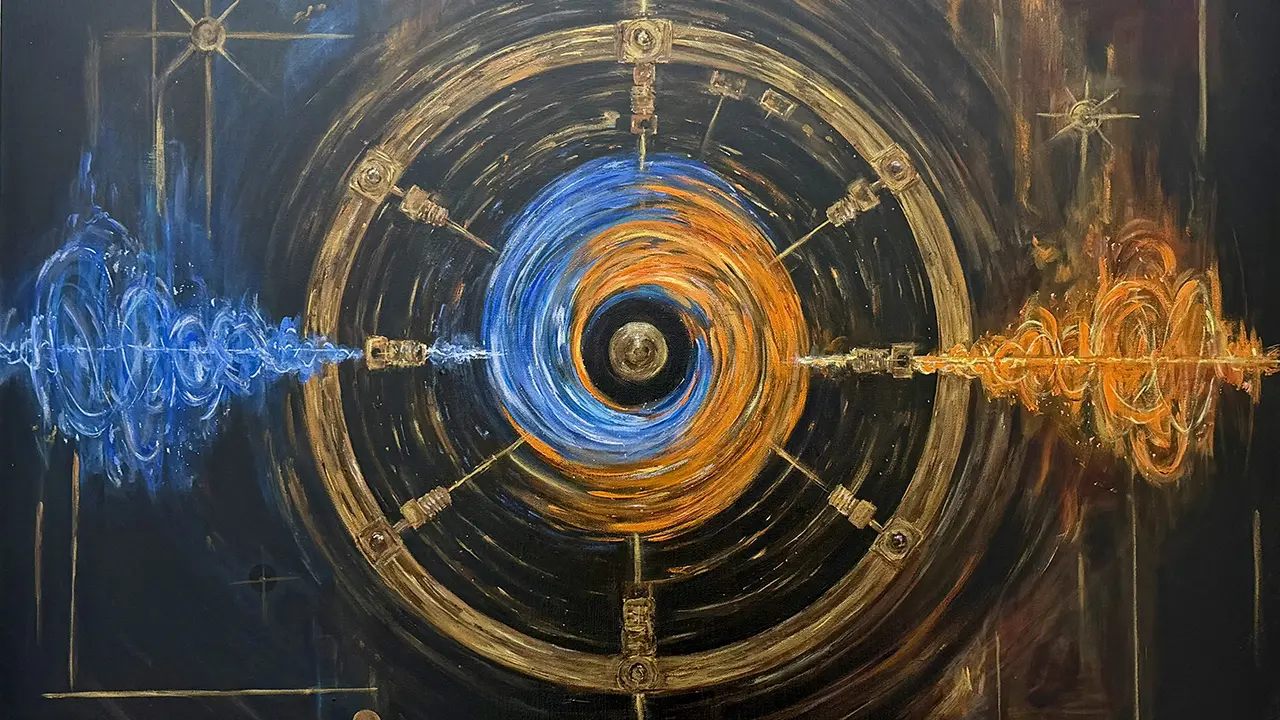
Researchers at the Advanced Science Research Center (ASRC) at the CUNY Graduate Center have developed a novel method for wave amplification. Their approach involves interacting with rotating bodies, but instead of using physically spinning matter, they engineered a radio-frequency device. This device's properties are modulated in space and time to simulate the effects of rotation. This breakthrough offers a new way to understand and manipulate wave phenomena. The ASRC team's work at the CUNY Graduate Center represents a significant step in theoretical and applied physics. By creating a 'black hole' analog, they can study complex wave interactions in a controlled laboratory environment. This research could have implications for fields ranging from astrophysics to telecommunications.
This research demonstrates a novel approach to simulating complex physical phenomena, specifically wave amplification analogous to that found near rotating bodies like black holes. By engineering a radio-frequency device with spatially and temporally modulated properties, the scientists have created a laboratory analog without the need for actual mechanical rotation. This method allows for controlled experimentation and deeper understanding of wave dynamics. The innovation lies in abstracting the core physical principles of rotation's effect on waves and replicating them through electromagnetic manipulation. This could pave the way for new experimental techniques in physics and potentially lead to advancements in fields that utilize wave phenomena, such as telecommunications or advanced sensing technologies, by providing a more accessible platform for studying these effects.
AI-generated to prompt reflection — not editorial opinion, not advice, not a statement of fact. How this works.