Scientists Propose Mapping Exoplanet Surfaces Using Optical Interferometry
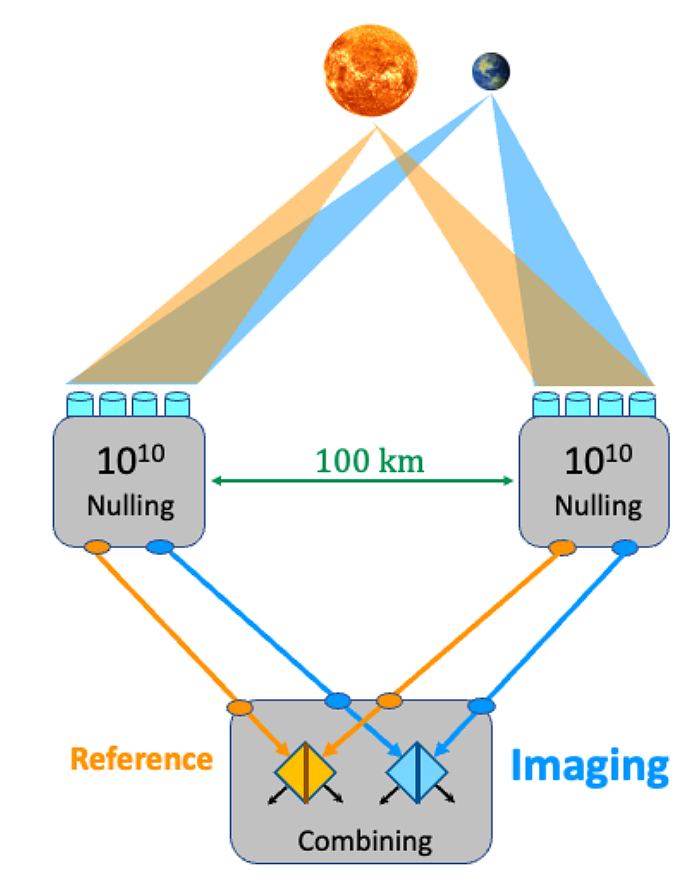
Researchers at Brookhaven Science Associates are developing a novel approach to image the surface features of Earth-like exoplanets in visible light. The proposed work aims to reconstruct these distant planetary surfaces, offering an unprecedented view of alien continents. This ambitious scientific goal hinges on a two-stage innovation in optical very-long-baseline interferometry (VLBI). The first stage involves the design of a new type of nulling interferometer, termed "dynamic hierarchical nulling." This advanced interferometer will combine inputs from multiple telescopes in a sophisticated manner. The ultimate objective is to achieve sufficient resolution to discern surface details on exoplanets orbiting nearby stars. Such a capability would represent a significant leap forward in exoplanet characterization and the search for extraterrestrial life.
This research initiative tackles the profound challenge of exoplanet surface imaging by leveraging advanced optical interferometry. The proposed "dynamic hierarchical nulling" technique represents a significant technological hurdle, aiming to overcome the inherent limitations of light collection and resolution for distant celestial bodies. Success in this endeavor could fundamentally alter our understanding of planetary diversity and habitability beyond our solar system. The development path will likely involve complex engineering, sophisticated data processing, and international collaboration, reflecting the scale of scientific ambition in the era of advanced telescope arrays. Future advancements in this field could provide critical data for astrobiological research and the long-term exploration of space.
AI-generated to prompt reflection — not editorial opinion, not advice, not a statement of fact. How this works.