Scientists Witness First Real-Time Formation of New Ocean Floor Segment
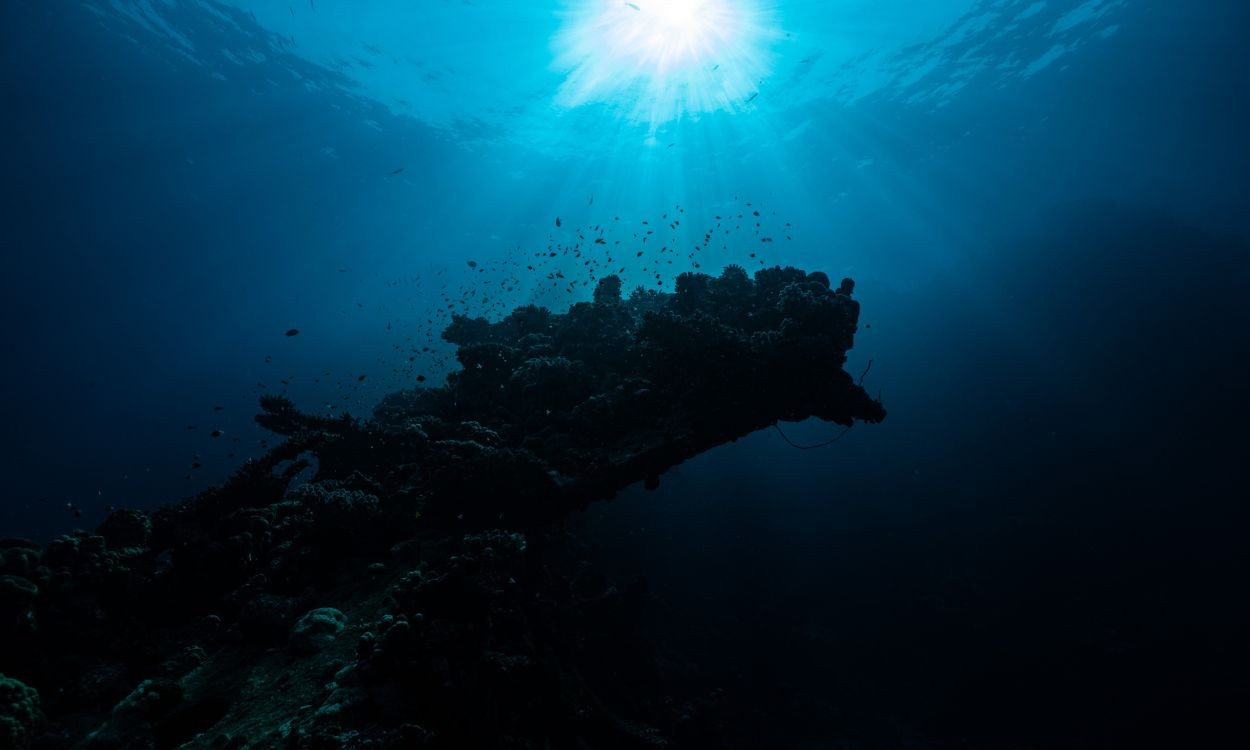
For the first time, scientists have directly observed the complete lifecycle of a new segment of the ocean floor forming in real-time. This groundbreaking observation, conducted in April 2024 on a mid-ocean ridge in the southern Indian Ocean, captured a sequence of events including earthquakes, a crustal fracture, magma upwelling, and lava flows. The phenomenon occurred where the African and Australian tectonic plates are slowly diverging. Published in the journal Nature, the study provides the most comprehensive account to date of an ocean floor spreading event. It offers insights into the creation of Earth's oceanic crust and helps explain a long-standing geological mystery: why these regions exhibit fewer earthquakes than theoretical models predict.
Researchers deployed a submarine observatory near the Amsterdam and Saint-Paul islands in February 2024, equipped with hydrophones, displacement sensors, and bathymetry equipment. On April 26, 2024, a series of small earthquakes initiated the process, propagating along the ridge as a magma-filled fracture, known as a dike. As the magma reservoir beneath emptied, the seafloor subsided and extended, indicating a partial collapse of the magma chamber that fueled the eruption. Over approximately 16 days, lava erupted onto the seafloor, creating extensive new lava fields, with some deposits exceeding 90 meters in thickness. An estimated 148 to 160 million cubic meters of lava were released.
The findings suggest that much of the plate movement in these areas occurs as slow, imperceptible aseismic slip, rather than large seismic events. The study estimates that about 76% of the movement during this episode was aseismic, with only 24% released through earthquakes. Furthermore, the deformation observed over a few days represented approximately 39 years of tectonic plate separation in the region. This suggests that ocean floor expansion is not continuous but rather occurs in episodic bursts, where decades of accumulated stress are released through a combination of fracturing, fault displacement, and submarine volcanism, described by the authors as 'quantum events' in oceanic crust formation.
This observation provides critical empirical data for understanding tectonic plate dynamics, particularly at mid-ocean ridges. The direct, real-time documentation of a seafloor spreading event, including aseismic slip and episodic lava extrusion, challenges assumptions of continuous, uniform plate movement. It highlights that geological processes at these boundaries may involve periods of slow accumulation followed by rapid, significant releases of energy and mass. This has implications for seismic hazard assessment and the modeling of Earth's crustal evolution. Future research could explore the triggers for these 'quantum events' and their frequency across different ridge systems, potentially refining our understanding of mantle convection and the long-term behavior of the lithosphere in the context of ongoing plate tectonics and the planet's thermal evolution.
AI-generated to prompt reflection — not editorial opinion, not advice, not a statement of fact. How this works.