Scotland's Helicopter Fleet Questioned Amidst Prolonged Cairngorms Wildfire
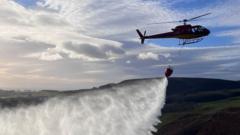
A significant wildfire in Scotland's Cairngorms National Park has entered its seventh day, prompting concerns about the adequacy of the country's helicopter resources for combating such blazes. Helicopters are currently engaged in efforts to control the spread of the flames, highlighting their crucial role in wildfire suppression. The ongoing fire underscores the challenges faced by Scotland in managing large-scale environmental incidents. The duration of the fire suggests that existing resources may be stretched, leading to questions about preparedness for future events. This situation raises important considerations regarding the capacity and availability of aerial firefighting assets. The effectiveness of current strategies and equipment is being implicitly tested by the persistence of the wildfire. Further evaluation of Scotland's emergency response capabilities, particularly in relation to aerial support, may be warranted.
The prolonged wildfire in the Cairngorms brings into sharp focus the operational capacity of Scotland's aerial firefighting resources. As climate patterns shift, increasing the frequency and intensity of such events, national preparedness is paramount. The current situation prompts an examination of whether existing helicopter fleets are sufficient in number, type, and readiness to effectively mitigate large-scale wildfires. Evaluating the procurement, maintenance, and deployment strategies for these critical assets is essential for future resilience. This incident serves as a potential indicator for the need to invest in or enhance aerial firefighting capabilities to meet evolving environmental challenges over the next decade.
AI-generated to prompt reflection — not editorial opinion, not advice, not a statement of fact. How this works.