Seattle's uniquely round raccoon, 'Jimothy,' becomes an internet sensation
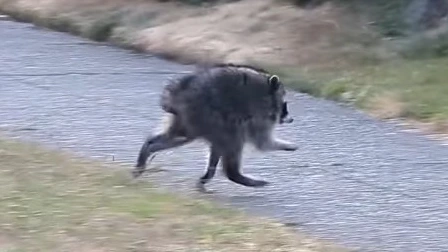
A raccoon from Seattle, nicknamed 'Jimothy,' has become an internet sensation due to its unusual appearance. The animal, noted for its round body and long legs, was first captured on video by Kiana Hall last week while she was walking. Hall initially mistook the creature for a cat, expressing surprise at its unique form. She posted the video on Instagram, naming the raccoon 'Jimothy' because of its distinctive look, and the clip quickly garnered millions of views. Subsequently, other videos emerged showing a younger Jimothy in the Seattle area, growing up in a garden with its family. These clips highlight the patient and caring nature of Jimothy's mother and siblings, who assisted him as he learned to navigate his environment. The raccoon's popularity has led to a dedicated subreddit where fans share artwork and tributes, including a Lego creation. The Seattle Mariners baseball team even featured Jimothy on their scoreboard during a game. A veterinarian from Washington State University, Marcie Logsdon, suggests Jimothy likely has a congenital spinal condition that contributes to his shorter, rounder appearance and less visible neck. While a definitive diagnosis requires closer examination, Logsdon is optimistic about Jimothy's ability to adapt and survive despite his condition. Kiana Hall expressed her joy that her video has brought happiness to many people, especially during difficult times, and hopes Jimothy remains healthy and free.
The viral phenomenon of 'Jimothy' the raccoon highlights the internet's capacity to amplify unique natural occurrences into global attention. While the animal's distinct physical characteristics, likely stemming from a congenital condition, have captured public fascination, the narrative emphasizes resilience and adaptation. This widespread positive engagement offers a counterpoint to the often-negative discourse online, demonstrating how shared moments of wonder can foster community and provide lighthearted distraction. Future considerations might involve understanding the ecological pressures that allow such animals to thrive in urban environments and how public awareness can translate into responsible wildlife coexistence strategies, ensuring that fascination does not inadvertently lead to intrusive human interaction or habitat disturbance.
AI-generated to prompt reflection — not editorial opinion, not advice, not a statement of fact. How this works.