Second 'Big Day' event encourages public to help track hyacinth macaws
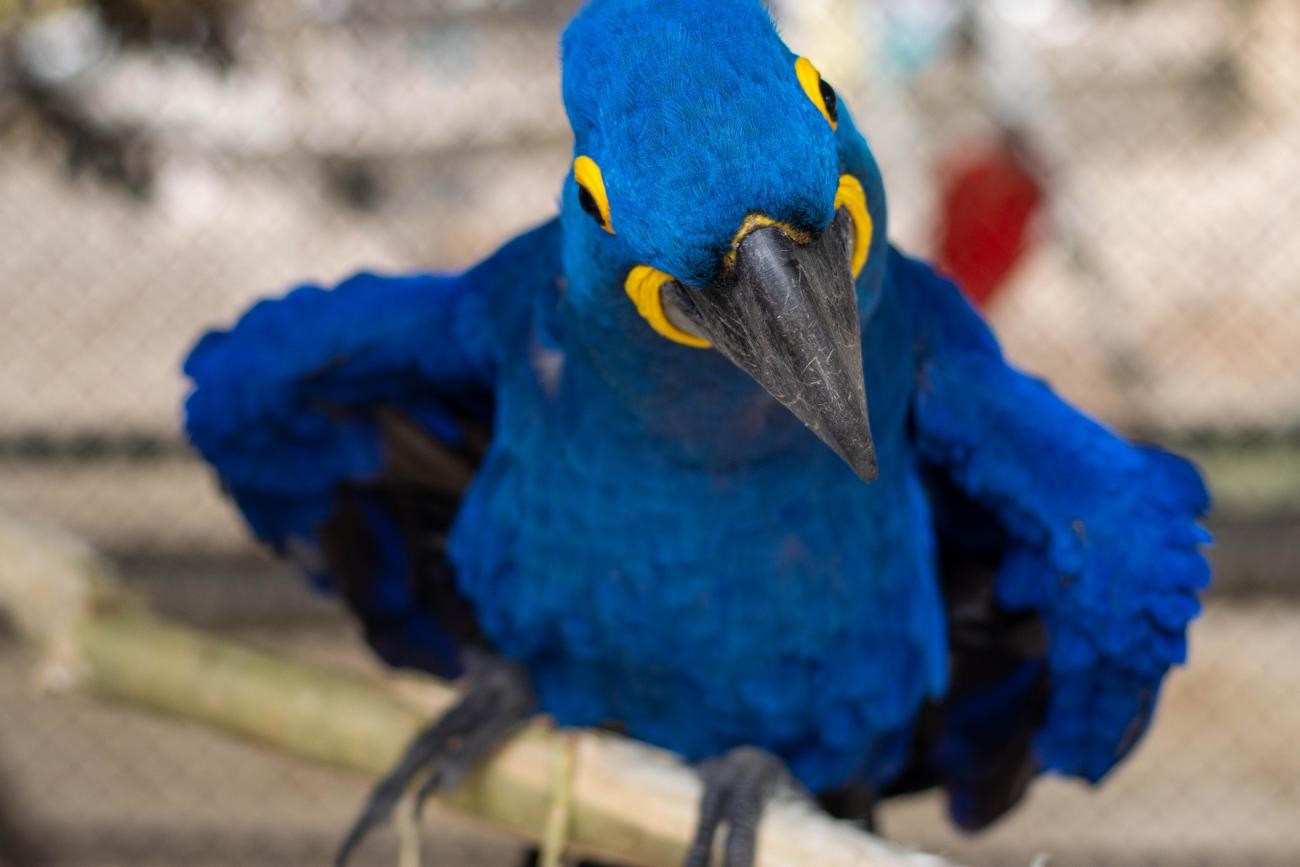
The Arara Azul Institute is organizing its second "Big Day das Araras-Azuis" event, a two-day initiative encouraging the public to observe and record sightings of the hyacinth macaw (Anodorhynchus hyacinthinus) in its natural habitat. This effort aims to gather extensive data crucial for the conservation of this endangered species. The event mirrors the global "Global Big Day" for birdwatching, focusing on a 24-hour period of observation. Last year's inaugural event recorded 1,275 sightings, with 897 in Brazil, 359 in Bolivia, and 19 in Paraguay, where the species is making a comeback after near extinction. The institute, which has been researching and protecting these birds for 30 years, relies on both expert scientific work and citizen science for data collection. They specifically urge people living in areas where the macaws occur, including farmhands, managers, and homemakers, to participate and report sightings. The institute also highlighted the absence of reported sightings from Tocantins, Maranhão, Piauí, and Bahia last year, emphasizing that even negative results—areas where macaws were sought but not found—are valuable for understanding the species' distribution and identifying areas needing conservation focus. Participants can contribute by sharing observations via WhatsApp at (67) 9987-10752 or by submitting records to platforms like eBird, WikiAves, and Biofaces, or through the official campaign form. Photos, videos, sound recordings, and written accounts are all welcome contributions.
This initiative leverages citizen science to address a critical conservation need for the hyacinth macaw, a species listed as Vulnerable. By engaging local communities and the broader public, the Arara Azul Institute expands its data-gathering capacity beyond scientific teams, acknowledging that residents in macaw habitats possess invaluable on-the-ground knowledge. The emphasis on reporting both sightings and non-sightings is a sophisticated approach to mapping species distribution and identifying potential range shifts or habitat pressures, which is increasingly important in the context of climate change and land-use transformation. The success of such programs hinges on sustained public engagement and the effective integration of citizen-collected data into formal conservation strategies, ensuring these efforts translate into tangible protection measures for vulnerable populations.
AI-generated to prompt reflection — not editorial opinion, not advice, not a statement of fact. How this works.