Secrets of Charlemagne's Throne in Aachen Cathedral Revealed
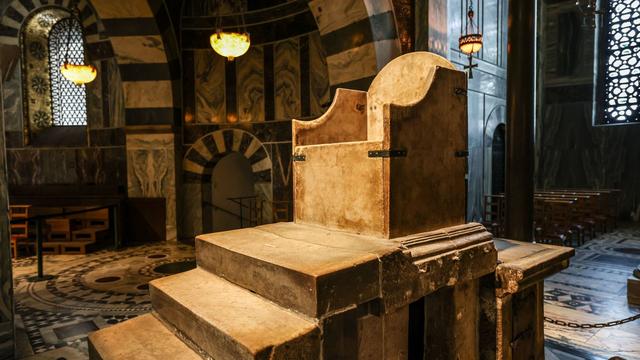
The Palatine Chapel in Aachen Cathedral, built by Charlemagne around 800 AD, houses the famous "Throne of Charlemagne." This historical artifact is not just a symbol of imperial power but also a complex structure with hidden details. Recent research has shed new light on its construction and significance. The throne is composed of 56 marble slabs, sourced from various locations, including the Church of the Holy Sepulchre in Jerusalem. Its design reflects Carolingian ideals of imperial authority and religious devotion. The placement of the throne within the chapel was also strategically important, emphasizing the emperor's connection to God and the divine right to rule. For centuries, it served as the coronation seat for German kings, underscoring its enduring symbolic value. The chapel itself, a masterpiece of Carolingian architecture, was inspired by Byzantine models, particularly the Basilica of San Vitale in Ravenna. The throne's intricate marble work and the overall design of the chapel highlight the advanced craftsmanship and artistic sophistication of the era. Ongoing studies continue to explore the throne's historical context and its role in medieval European history.
The Charlemagne Throne in Aachen Cathedral represents a significant artifact of early medieval European governance and religious ideology. Its construction and placement within the Palatine Chapel reflect a deliberate fusion of imperial power with divine sanction, a foundational concept for subsequent European monarchies. The sourcing of materials from distant holy sites underscores the ambitious reach and symbolic capital sought by the Carolingian Empire. Examining such historical objects through the lens of contemporary governance reveals the enduring human need to legitimize authority through ceremony and material representation. As societies evolve, the methods of asserting power change, but the underlying principles of legitimacy and symbolic endorsement remain relevant, offering insights into how future leadership structures might be perceived and validated in an increasingly interconnected and technologically mediated world.
AI-generated to prompt reflection — not editorial opinion, not advice, not a statement of fact. How this works.