Security Questions Arise Over Trump's New Air Force One Jet Gifted by Qatar
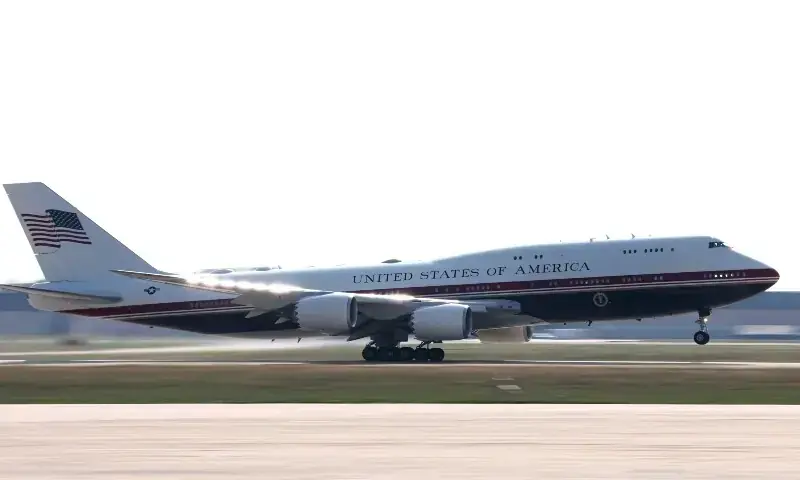
US President Donald Trump is facing scrutiny over the security of his new Air Force One aircraft, a Boeing 747-8 retrofitted and gifted by Qatar. The concern arose after Trump used an older jet for his return flight from a NATO summit this week, despite his apparent excitement for the new plane. The new aircraft had recently completed its first international trip to Ankara, Turkey. Trump announced he was sending the luxury jet ahead to a British airbase so US troops could tour it, a gesture facilitated by the Qatari royal family. The New York Times reported that this new plane reportedly lacks the advanced security features of the older jet, such as anti-missile defenses, and that the Secret Service had advised the change. Speculation about security risks intensified due to renewed US-Iran hostilities, as Iran shares a border with Turkey. Journalists on the older plane from Ankara were also instructed to keep their window blinds down, a measure typically associated with war zones. While Trump denied security concerns, he later alluded to alleged Iranian assassination attempts during his flight back to Washington from the UK. White House Communications Director Steven Cheung defended the new plane's safety, stating it is state-of-the-art with high-level security protocols. Cheung also suggested that "distraction and misdirection" are among the tools used to address threats against the President.
The reported security concerns surrounding President Trump's new Air Force One, a gift from Qatar, highlight the complex interplay between presidential security, international relations, and public perception. The decision to switch aircraft, coupled with the timing of heightened tensions with Iran, raises questions about risk assessment and the transparency of security protocols. The White House's statements, emphasizing advanced security and the use of "distraction and misdirection," suggest a strategic approach to managing threats, though this can also be interpreted as a tactic to deflect scrutiny. Future administrations will need to navigate the challenges of accepting foreign gifts for critical national security assets, balancing diplomatic gestures with the imperative of maintaining absolute control over presidential security infrastructure and information. The incident underscores the ongoing need for robust, verifiable security measures that are insulated from geopolitical signaling and potential vulnerabilities.
AI-generated to prompt reflection — not editorial opinion, not advice, not a statement of fact. How this works.