Security Researchers Access Amazon Echo Show 8 (3rd Gen) Through UART and eMMC Exploits
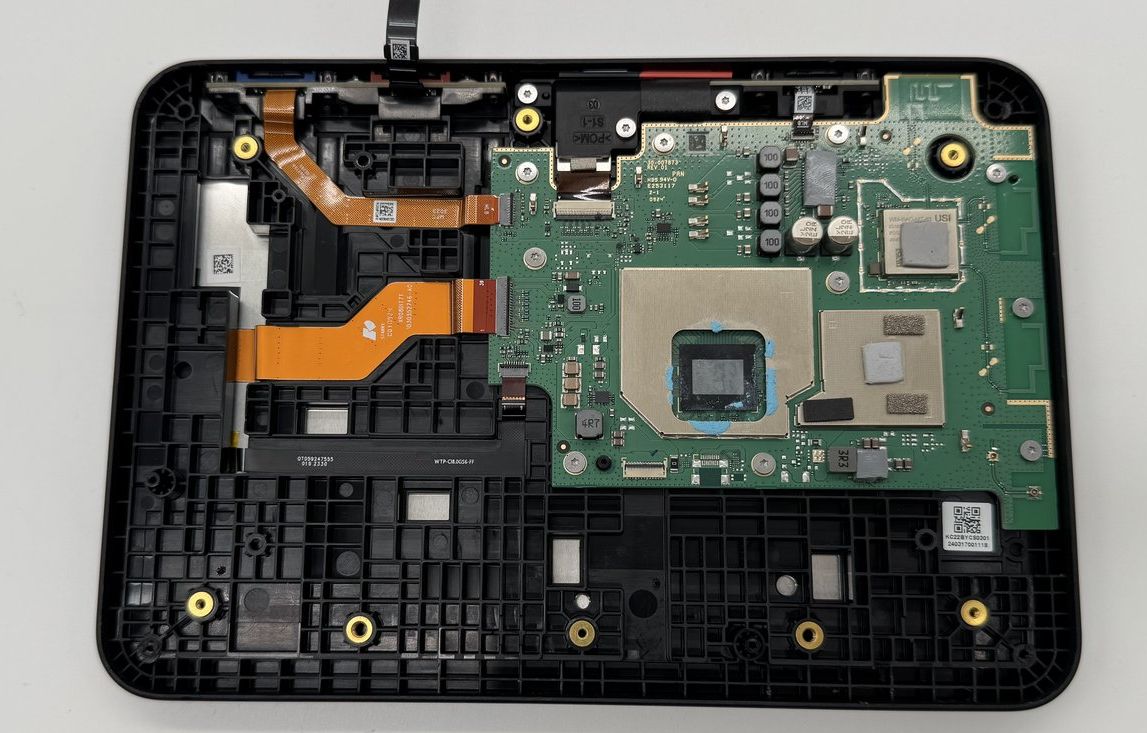
Security researchers have successfully gained low-level access to the Amazon Echo Show 8, 3rd Generation, by exploiting its UART and eMMC interfaces. These methods allow for direct hardware interaction, bypassing typical software security measures. The Echo Show 8, like other Amazon smart displays, runs a Linux-based operating system derived from Android, known as FireOS. This underlying system, while powerful, presents challenges for unauthorized modifications or uses not sanctioned by Amazon. The researchers' findings demonstrate a potential vulnerability in how these devices handle hardware-level access. While the specific details of the exploit are not fully disclosed, the use of UART (Universal Asynchronous Receiver-Transmitter) and eMMC (embedded MultiMediaCard) suggests a deep dive into the device's internal hardware connections. These interfaces are often used for debugging and manufacturing purposes, and their compromise can lead to significant control over the device. This discovery highlights the ongoing cat-and-mouse game between device manufacturers and security researchers in securing smart home technology.
The reported access to the Echo Show 8 via hardware interfaces like UART and eMMC underscores the inherent security challenges in interconnected consumer electronics. While these interfaces are critical for manufacturing and diagnostics, their potential for exploitation raises questions about supply chain security and post-production hardening. As devices become more integrated into daily life, the incentive for unauthorized access, whether for research or malicious intent, grows. Manufacturers face a continuous trade-off between device accessibility for development and robust security against deep-level hardware intrusion. Future device architectures may need to incorporate more sophisticated hardware-level security measures, potentially limiting debug ports or implementing stronger authentication for such access, to mitigate risks in an increasingly connected ecosystem.
AI-generated to prompt reflection — not editorial opinion, not advice, not a statement of fact. How this works.