Senate Panel Questions Flood Fund Diversion in Khyber Pakhtunkhwa
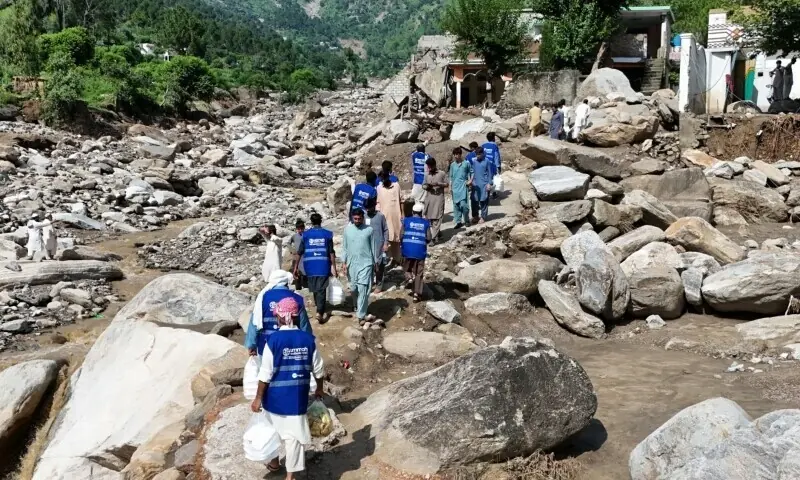
A Pakistani Senate committee has raised serious concerns regarding the allocation of foreign funds intended for flood rehabilitation in Khyber Pakhtunkhwa (KP). The Senate Standing Committee on Economic Affairs observed that funds appear to have been diverted to less-affected or even unaffected areas, potentially for political reasons. This observation was made during a review of foreign-funded uplift projects, with a particular focus on KP's road, flood rehabilitation, and irrigation schemes.
Committee members noted significant disparities in project allocation, highlighting that Mardan, a district not severely impacted by floods, received the most road projects. In contrast, heavily flood-affected districts like Upper Dir, Lower Dir, and Chitral received fewer projects. Senator Rubina Khalid pointed out that Mardan saw 16 roads constructed, while Dir, despite extensive flood damage, received only 12 kilometers of road work. Senators also questioned the selection criteria for projects in Peshawar, which experienced no flood damage but had nine roads built. The committee recommended establishing mechanisms to ensure funds are strictly utilized for their intended purposes.
Additionally, the committee expressed displeasure over alleged interference by World Bank staff in a foreign-funded project in Sindh. Senator Saifullah Abro, who presided over the meeting, questioned the World Bank's local representative's role, stating that lenders should finance projects but not dictate their implementation. The committee directed the Economic Affairs Division to address this matter with the World Bank, emphasizing that project execution remains the responsibility of Pakistani institutions. The committee also noted that the cost of the Sindh project had doubled and that Pakistan could save approximately Rs14 billion by resisting unnecessary changes.
The Senate committee's scrutiny of flood rehabilitation fund allocation in KP and alleged World Bank interference in Sindh highlights systemic challenges in Pakistan's project management and external debt utilization. The observed diversion of funds suggests potential governance weaknesses and the influence of political considerations over genuine need in resource distribution. This pattern, if widespread, could undermine the effectiveness of international aid, exacerbate existing inequalities, and contribute to Pakistan's rising debt burden. The committee's call for stricter fund utilization mechanisms and clear delineation of responsibilities between lenders and local authorities is a crucial step. However, the underlying incentive structures that permit such diversions and external pressures need a deeper examination. Moving forward, strengthening institutional capacity for transparent project selection, monitoring, and accountability, alongside a more assertive stance in negotiating with international financial institutions, will be vital for ensuring that development resources effectively address national priorities and contribute to sustainable recovery and growth in the coming decade.
AI-generated to prompt reflection — not editorial opinion, not advice, not a statement of fact. How this works.