Senegal's Constitutional Revision: Minister Defends Project Amidst Political Debate
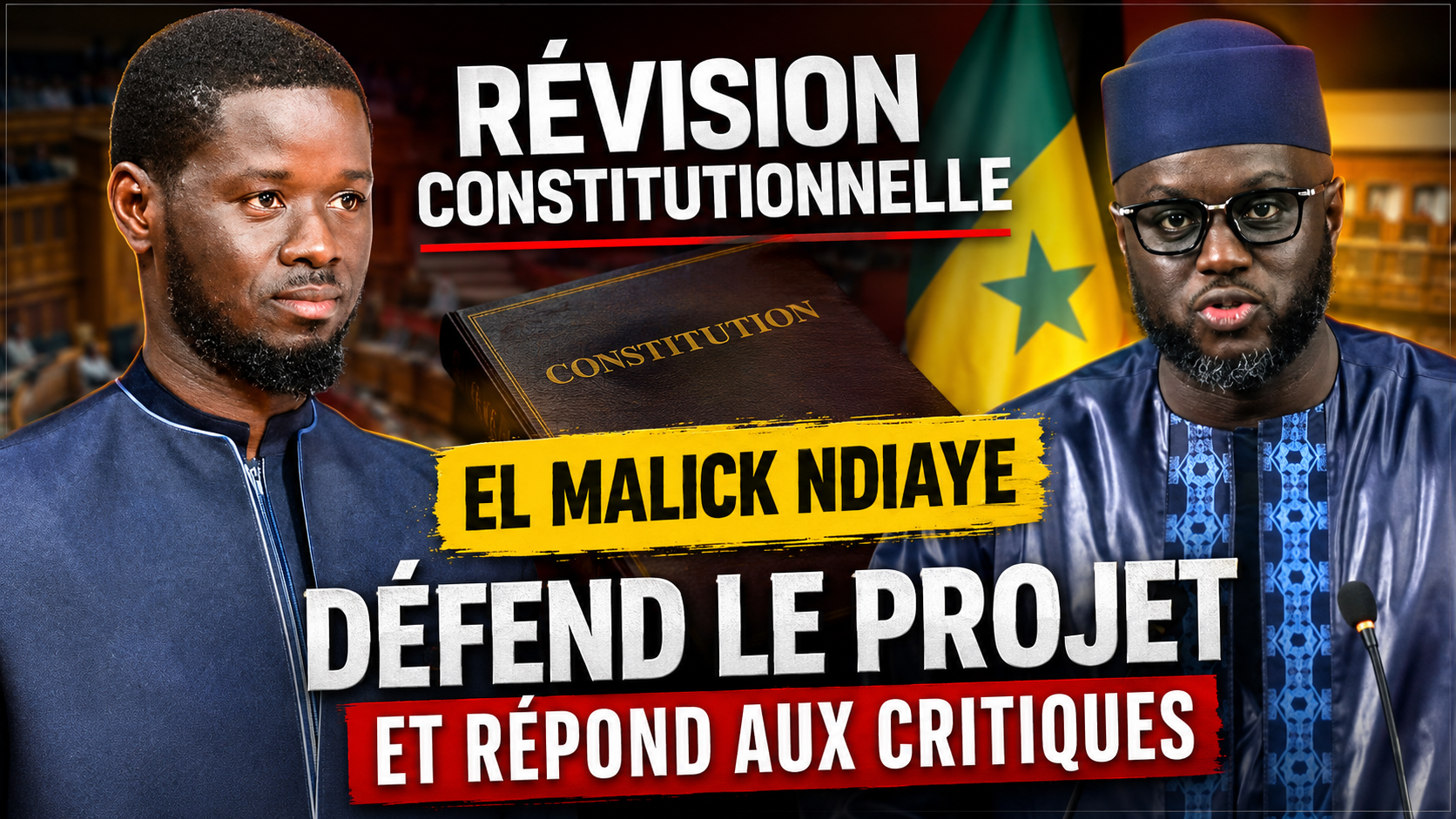
During the examination of a proposed constitutional revision, Senegalese Minister El Malick Ndiaye defended the project, urging for a calm debate focused on the text's content rather than political rivalries. He highlighted that Senegal has a history of numerous constitutional reforms adopted through parliamentary procedures, emphasizing that the current process adheres to these established norms. Ndiaye stressed the importance of substantive discussion, aiming to move beyond partisan disputes to a more constructive engagement with the proposed changes. The minister's remarks came as the government sought to advance its legislative agenda concerning the nation's foundational law. He implicitly addressed criticisms by advocating for a reasoned approach to the revision, suggesting that such discussions are crucial for democratic progress. The call for a debate centered on the merits of the proposed articles aims to foster a more informed public and parliamentary discourse. This initiative underscores the government's commitment to transparency and reasoned deliberation in amending the constitution.
The push for constitutional revision in Senegal, as articulated by Minister El Malick Ndiaye, presents a critical juncture for the nation's governance framework. By advocating for a debate focused on textual content over political rivalries, the government signals an intent to depoliticize fundamental legal changes. However, the inherent tension between legislative reform and political dynamics is a persistent challenge in many democracies. Future constitutional processes will likely benefit from mechanisms that ensure broad stakeholder consensus and safeguard against potential overreach or partisan capture of foundational legal amendments. The long-term stability and legitimacy of such reforms hinge on transparent processes and genuine public engagement, especially in an era where digital platforms can amplify both constructive dialogue and divisive rhetoric.
AI-generated to prompt reflection — not editorial opinion, not advice, not a statement of fact. How this works.