Senior Advocate Expresses Concern Over Shift from Ballots to Violence for Power
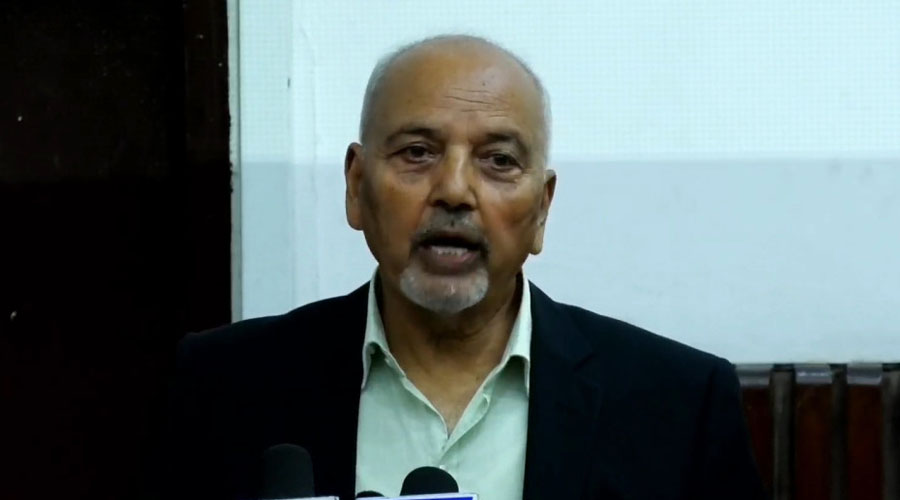
Senior advocate Radheshyam Adhikari has voiced concerns that a mindset favoring the acquisition of power through violence, rather than through ballots (voting), is attempting to establish itself. He shared these worries during an event commemorating Prakash Kafle's 34th death anniversary and the 32nd Prakash Human Rights Award ceremony in Lalitpur on Saturday. Adhikari's statement highlighted his apprehension regarding the current political climate and the future trajectory of democracy in Nepal. The event aimed to honor the memory of Prakash Kafle and recognize contributions to human rights. The senior advocate's remarks suggest a critical view of recent political developments and their potential implications for democratic principles. He emphasized the importance of maintaining democratic processes and the rule of law. His participation in the event underscores the ongoing discourse surrounding political stability and the health of democratic institutions in the country. The distribution of the Prakash Human Rights Award also signifies a commitment to upholding human rights values.
The statement by Senior Advocate Radheshyam Adhikari points to a potential erosion of democratic norms, where the legitimacy of power transitions might be challenged by violent means rather than established electoral processes. This concern is particularly relevant in contexts where political stability is fragile. The underlying dynamic may involve actors seeking to bypass democratic mechanisms due to perceived inefficiencies or a desire for more immediate control. Examining the incentive structures that might encourage such a shift is crucial. Future governance models will need to reinforce the sanctity of the ballot and strengthen institutions that uphold the rule of law to preemptively address any tendency towards political violence. This also highlights the importance of public trust in democratic institutions and the electoral process itself.
AI-generated to prompt reflection — not editorial opinion, not advice, not a statement of fact. How this works.