Sergipe's Electorate for 2026 Elections: Key Demographics Revealed
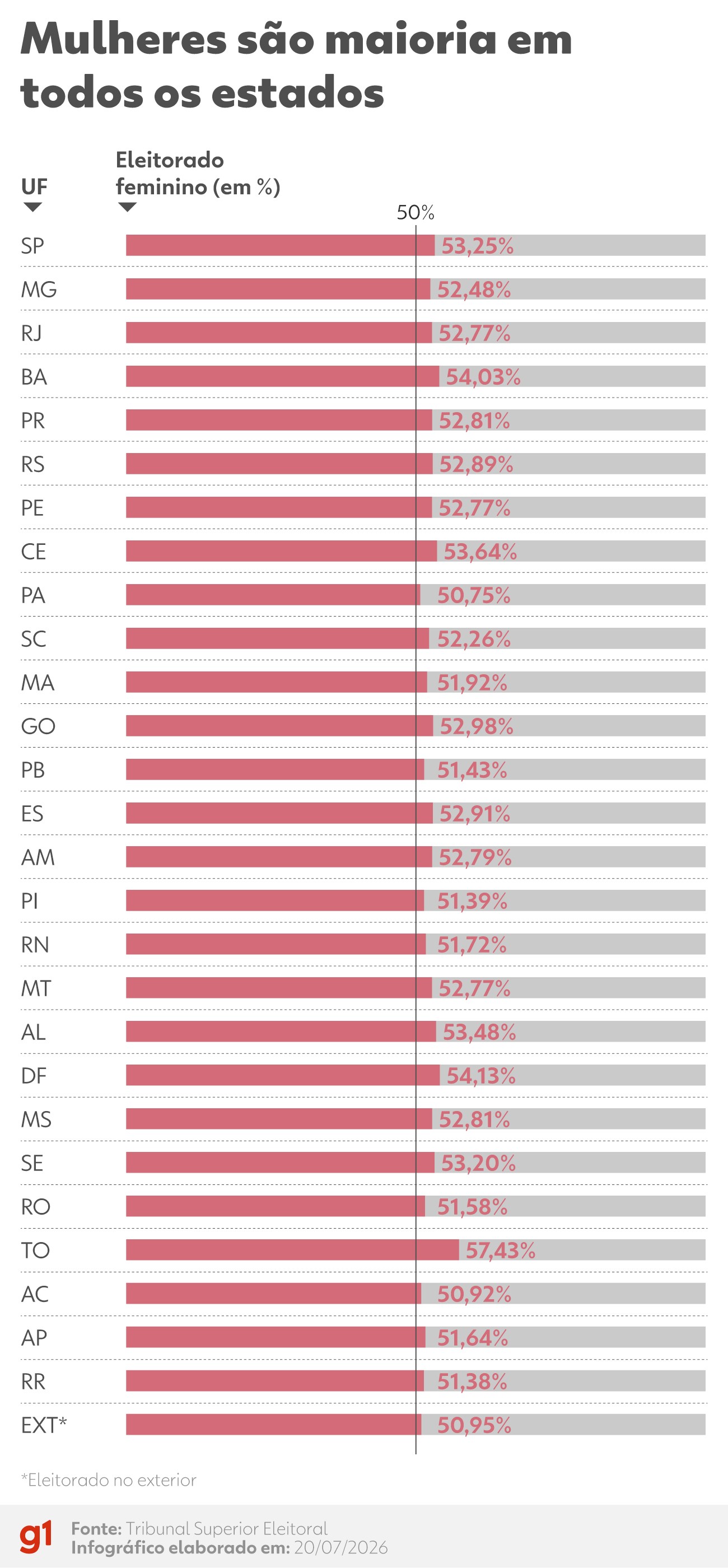
The Superior Electoral Court (TSE) has released a detailed profile of Sergipe's electorate for the 2026 elections, comprising 1,740,124 eligible voters. This figure represents a 4% increase, or 68,323 more voters, compared to the 2022 elections. Voters will elect the President, Governor, Senators, Federal Deputies, and State Deputies. The first round is scheduled for October 4, with a potential second round for majoritarian positions on October 25. Of the total electorate, 1,503,354 have mandatory voting, while 236,770 have optional voting. Women constitute the majority at 925,812 (53.20%), with men numbering 814,312 (46.80%). A total of 274 voters have opted for social name registration. Regarding biometric data, 95.63% of Sergipe's voters are registered, leaving 4.37% unregistered. The largest age group is 25-29 years old with 179,691 voters, while the smallest group is those aged 100 and over, numbering 601. Additionally, 18,076 voters, or 1.04% of the total, have declared a disability. In terms of education, Sergipe is among five Brazilian states where incomplete elementary education is the most common level, with 481,769 voters in this category. Race or color information is missing for 79.09% of voters; among those who did provide this data, 'parda' (brown) is the most frequent classification with 242,930 voters.
The data from Sergipe's electorate for the 2026 elections highlights demographic trends relevant to electoral strategy and public policy. The increase in eligible voters suggests evolving demographics or increased registration efforts. The gender distribution, with women forming a majority, indicates their significant influence on electoral outcomes. The prevalence of incomplete elementary education as the most common educational attainment points to ongoing challenges in educational access and completion, which may correlate with voter engagement and policy priorities. The high percentage of undeclared race or color data suggests potential issues with data collection or voter comfort in disclosing this information, impacting the ability to analyze representation across different racial groups. These insights underscore the importance of targeted outreach and policy considerations that address educational disparities and ensure inclusive participation.
AI-generated to prompt reflection — not editorial opinion, not advice, not a statement of fact. How this works.