Serra da Cangalha: Brazil's 4th Largest Meteorite Crater Formed by Energy Blast
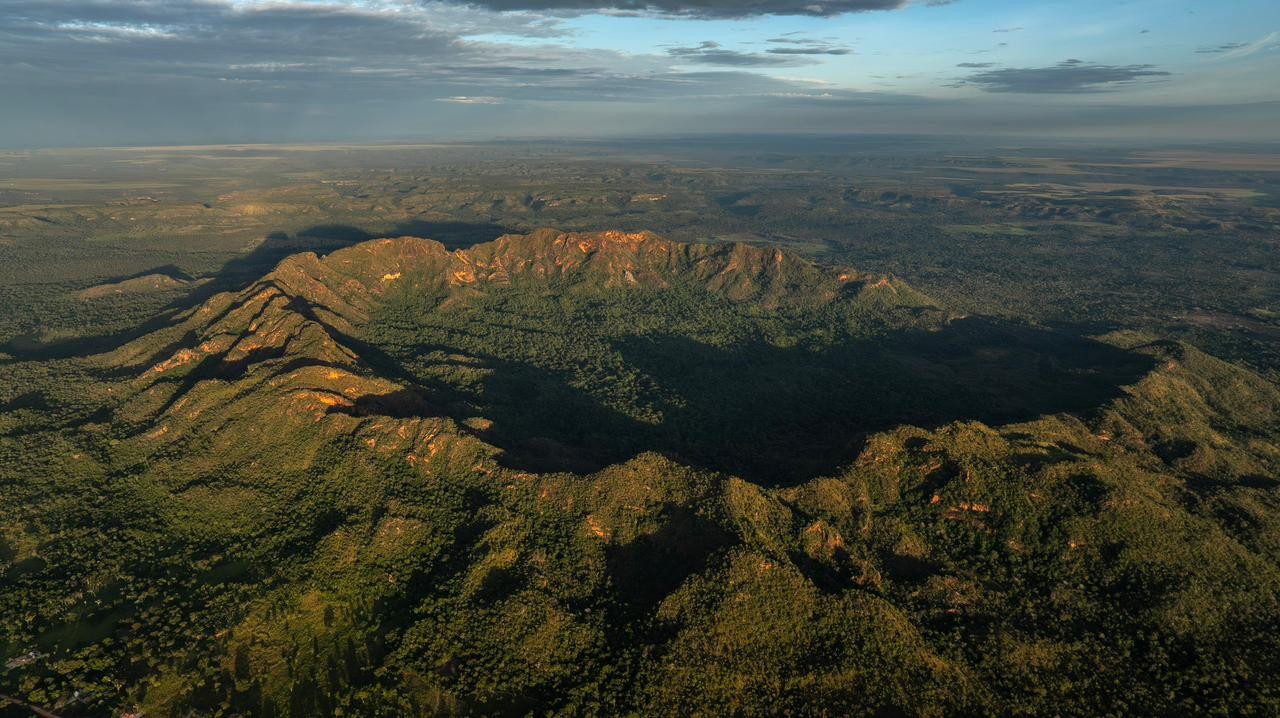
Located in Campos Lindos, Tocantins, Brazil, the Serra da Cangalha geological structure is the fourth largest impact crater in the country, formed approximately 300 million years ago. This monumental site resulted from the impact of a meteorite weighing around 20,000 tons. Intriguingly, geological studies suggest the meteorite did not directly strike the ground but exploded in the atmosphere, releasing immense energy that shaped the landscape. This colossal energy release deformed the rocks of the Parnaíba Sedimentary Basin, creating concentric rings visible from satellite imagery, akin to ripples on water. The popular name "Cangalha" originates from the local resemblance of the mountain range to a horse's saddle, a traditional designation rather than a scientific one. Initially identified in the 1970s by Project Radam Brasil as a dome, subsequent analysis of deformed rocks confirmed its origin as an impact crater. Today, Serra da Cangalha is recognized as a significant geological monument with substantial geotourism potential. The municipal government, in collaboration with landowners, is working to improve access and promote tourism initiatives to attract visitors interested in its mystery, science, and unique scenery. Activities offered include guided hikes along the impact rings, exploration of waterfalls and the "Caverna do Meteoro" (Meteor Cave), and paramotor flights providing aerial views of the crater. The municipality aims to establish Campos Lindos as a key destination for tourists visiting Tocantins seeking extraordinary natural phenomena.
The Serra da Cangalha's formation highlights the profound geological impact of extraterrestrial events on Earth's surface, offering a unique natural laboratory for scientific study and tourism. The preservation of this large impact structure, particularly one formed by an atmospheric explosion rather than a direct impact, presents opportunities for understanding energy dissipation and geological deformation processes. Its potential for geotourism underscores the economic and educational value of preserving such natural wonders, encouraging local development while fostering scientific curiosity. Future management will likely balance conservation efforts with the desire to attract visitors, requiring careful planning to mitigate any environmental impact from increased human activity and to ensure the site's long-term integrity.
AI-generated to prompt reflection — not editorial opinion, not advice, not a statement of fact. How this works.