Severe Storm in São Paulo State Topples High-Voltage Power Towers
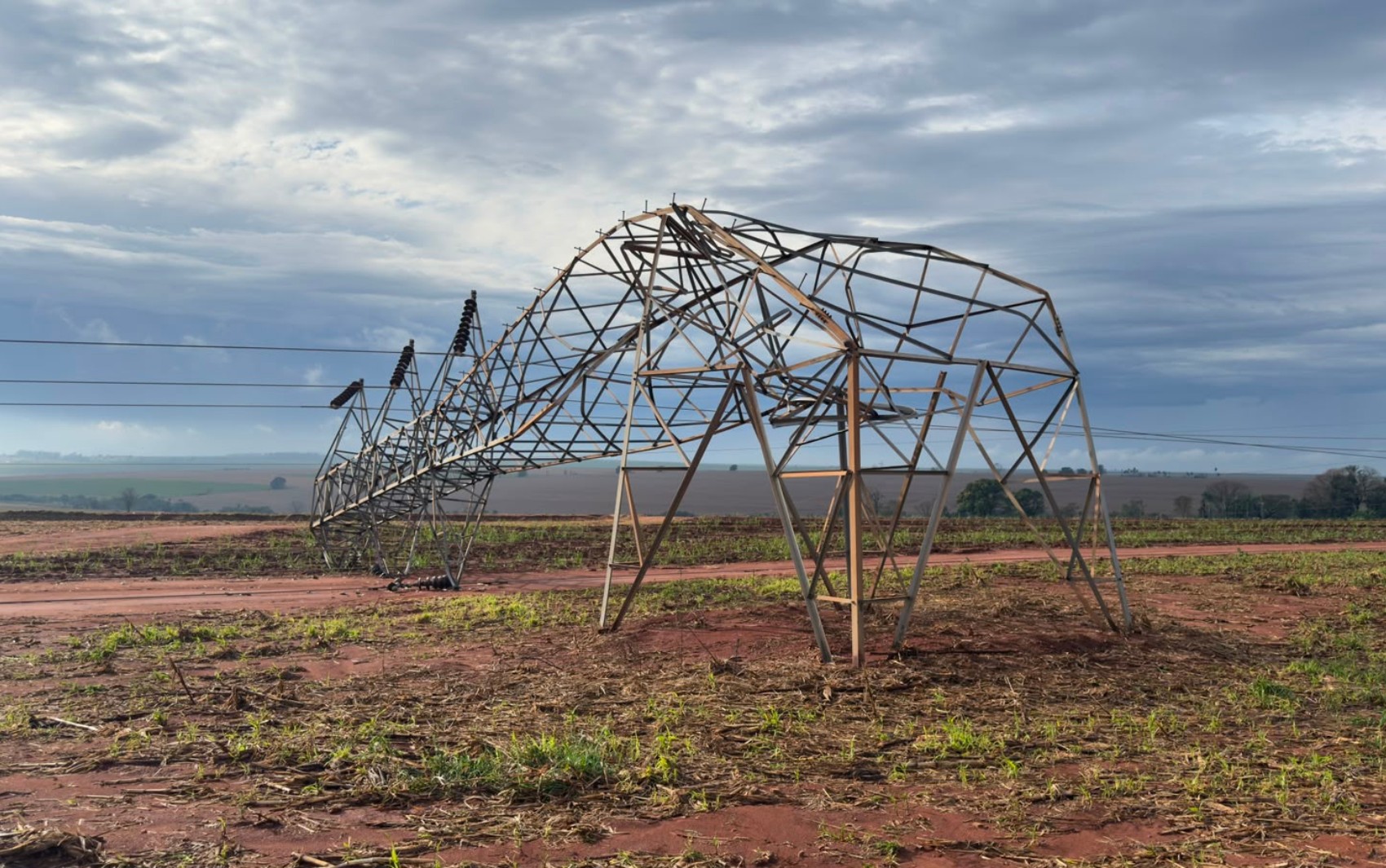
A powerful storm with winds exceeding 100 km/h struck the interior of São Paulo state on Friday, May 24th, causing significant damage, including the toppling of high-voltage power towers in Taquaritinga. Rural producer Fernando Panobianco described the scene near his property, between Taquaritinga and Jaboticabal, as unprecedented, with one tower visibly twisted and power lines scattered. This incident was part of a larger event where 34 towers fell, disrupting electricity to at least five cities in the Ribeirão Preto region. As of Saturday morning, May 25th, over 81,000 properties remained without power, according to CPFL. Taquaritinga itself experienced wind gusts of 100 km/h, leading to a 68.94% compromise in its electricity supply, leaving nearly 5,000 customers without service on Saturday. The storm's impact extended beyond power outages, causing fallen trees, damaged roofs, and interruptions to water, telephone, and internet services. A section of the Washington Luís Highway (SP-310) was also rendered impassable. In response to the widespread destruction, Mayor Dr. Fulvio Zuppani declared a state of emergency. The storm also damaged a municipal school, EMEB Estevam Schlobach Salvagni, resulting in the suspension of classes until Tuesday, May 28th. Civil Defense teams are continuing to assess the damage and respond to incidents.
This event highlights the vulnerability of critical infrastructure to extreme weather phenomena, exacerbated by climate change. The toppling of high-voltage power towers and subsequent widespread outages underscore the need for grid resilience strategies, potentially involving more robust tower designs and advanced weather forecasting for proactive measures. The economic impact, including service disruptions and emergency declarations, points to systemic risks that require integrated planning between energy providers, civil defense, and municipal governments. Future infrastructure investments must account for the increasing frequency and intensity of such events, balancing cost-effectiveness with long-term reliability and public safety in an evolving climate landscape.
AI-generated to prompt reflection — not editorial opinion, not advice, not a statement of fact. How this works.