Sexual harassment cases surge 198% in Rio de Janeiro; women are 90% of victims
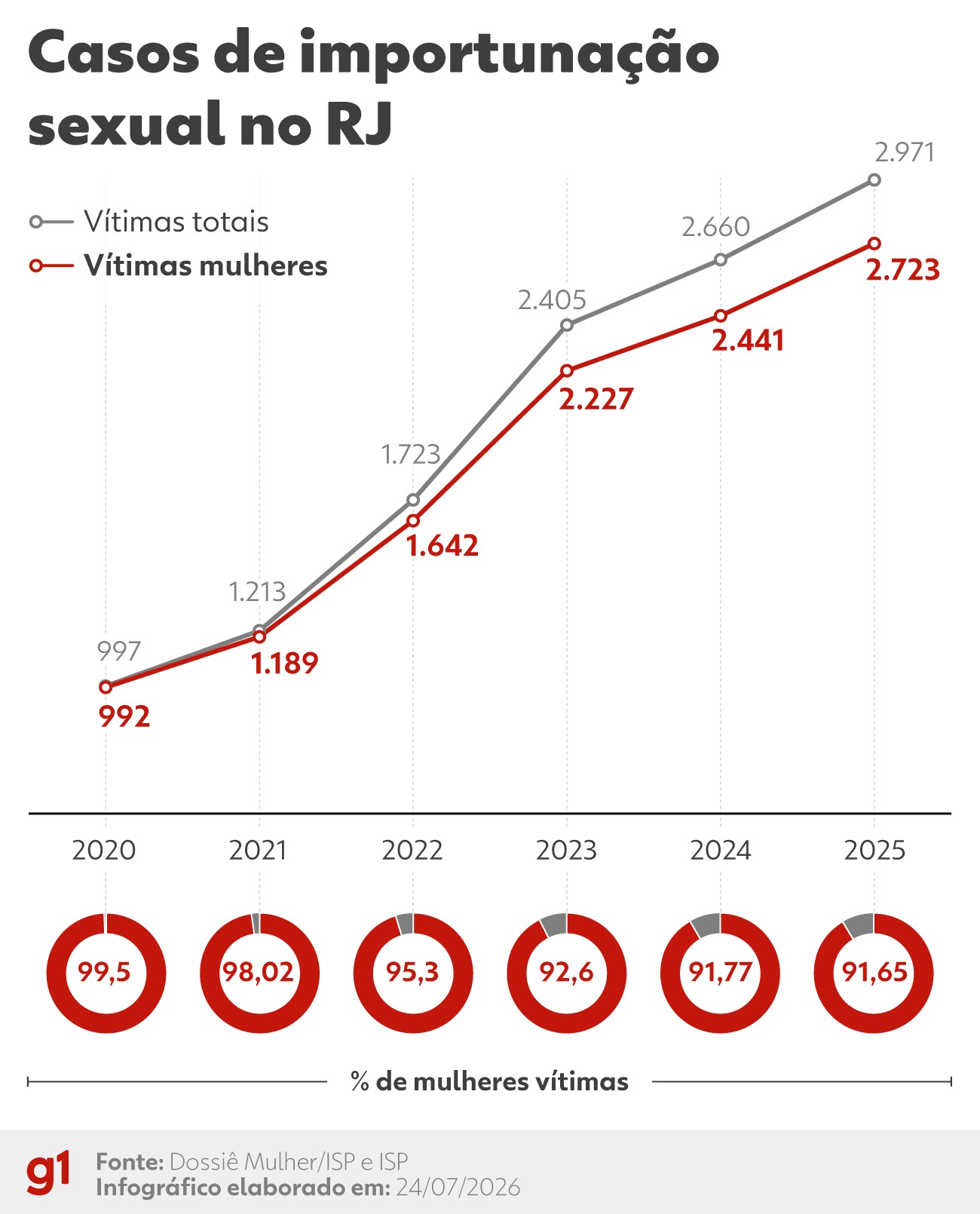
Sexual harassment cases in Rio de Janeiro have seen a dramatic increase of 197% between 2020 and 2025, according to data from the Public Security Institute. Women constitute over 90% of these victims throughout this period. In 2025 alone, 2,723 women were sexually harassed, representing 91% of all reported cases, averaging 8.2 incidents per day. Specifically, reported cases against women rose from 992 in 2020 to 2,723 in 2025, a 175% increase. A significant portion of these victims in 2025 were young women aged between 12 and 17, and 18 to 29 years old.
The surge includes both digital and public transport incidents. A notable case involved a tattoo artist, Taís Thorpe, who reported a pizzaiolo from Fortaleza for masturbating during a TikTok live stream. Thorpe emphasized the importance of criminalizing digital sexual harassment, as many victims believe it only occurs in person. Other incidents include a woman reporting a friend of her husband for masturbating during video calls and an office attendant being harassed by a client who masturbated on camera, made threats, and described her clothing. A case on the BRT Curral Falso involved a man ejaculating on a victim's pants.
Via Pizza, the employer of the accused pizzaiolo, stated they condemned the conduct and took appropriate labor measures. However, Thorpe contested this, claiming the company's response was slow and did not accurately reflect her experience, creating a discrepancy between her account and the company's statement. Thorpe urged victims to report such crimes, highlighting that digital harassment is a criminal offense.
The reported surge in sexual harassment incidents in Rio de Janeiro, particularly against women and in digital spaces, highlights evolving societal challenges in public safety and online conduct. The data suggests a potential increase in reporting, possibly driven by greater awareness and legal recourse for digital offenses, alongside persistent issues in public transportation. Examining the systemic response, including corporate accountability and law enforcement's capacity to address these crimes, is crucial. Future policy considerations might focus on preventative education, enhanced digital platform moderation, and support systems for victims to encourage reporting and ensure justice, while also addressing the underlying cultural factors that contribute to such behavior.
AI-generated to prompt reflection — not editorial opinion, not advice, not a statement of fact. How this works.