Shark researcher's method for safely sedating bull sharks
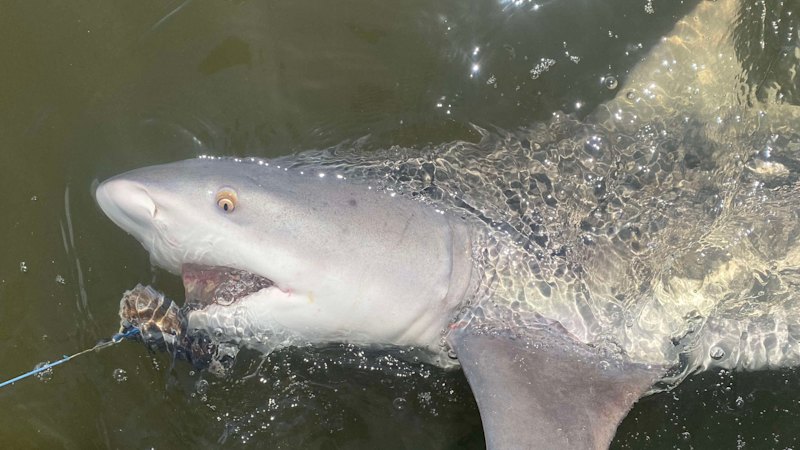
Taryn-Lee Perrior, a researcher, has developed a technique to safely sedate bull sharks. Last summer, she captured over 200 sharks as part of her research. Her work involves testing shark blood for toxins that could potentially impact human health. This research aims to understand the transfer of toxins through the marine food web and their implications for public health. The sedating method is crucial for handling these powerful predators during scientific procedures. It allows researchers to conduct necessary tests without causing undue stress or harm to the animals. Perrior's findings contribute to both marine conservation efforts and human safety assessments regarding seafood consumption. The project highlights the importance of interdisciplinary approaches in environmental science and toxicology.
This research addresses the critical need for humane handling techniques in marine biology, particularly when dealing with potentially dangerous species like bull sharks. The development of a safe sedation method for scientific study is a positive step, enabling researchers to collect vital data on toxin levels without compromising animal welfare or safety. By testing for toxins that affect humans, the project also bridges the gap between ecological health and public health, underscoring the interconnectedness of marine ecosystems and human well-being. Future work could explore the broader applicability of these techniques across different shark species and research contexts, further enhancing the ethical standards of marine research.
AI-generated to prompt reflection — not editorial opinion, not advice, not a statement of fact. How this works.