SHEIN files for Hong Kong IPO, revealing strong revenue growth and tech-driven model
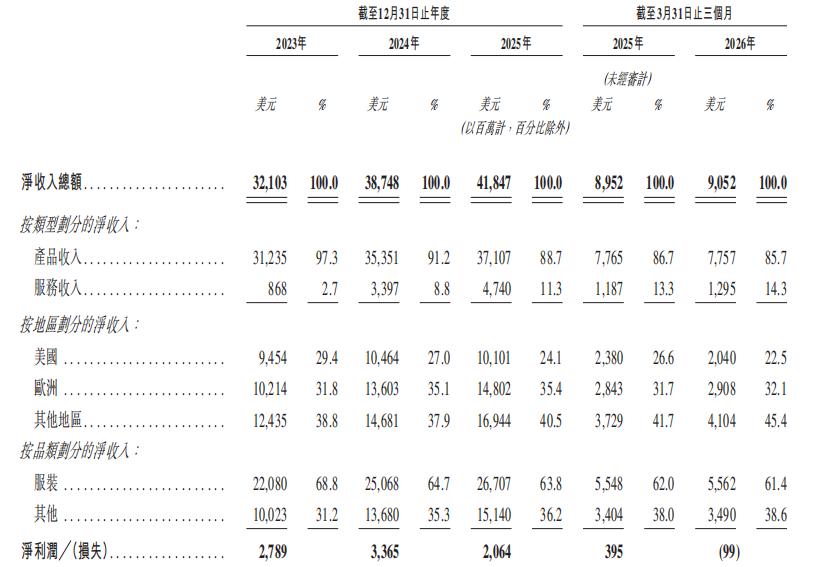
Fast-fashion giant SHEIN has submitted its listing application to the Hong Kong Stock Exchange, with Goldman Sachs, Morgan Stanley, and JPMorgan Chase serving as joint sponsors. The company's financial disclosures reveal significant revenue growth, reaching $32.10 billion in 2023 and projected to hit $41.85 billion by 2025, with a compound annual growth rate of 14.2%. Net profit stood at $2.79 billion in 2023, with projections for $3.37 billion in 2025, though a dip in 2025 is attributed to increased tax expenses and the unfavorable impact of the US eliminating small-value import exemptions, leading to higher tariffs. A net loss of $0.99 billion in the first quarter of 2026 was due to a non-operational accounting adjustment related to convertible preferred stock terms. Despite these fluctuations, SHEIN's core business remains robust, serving approximately 160 markets with 281 million active customers as of Q1 2026. GlobalData data indicates SHEIN surpassed Zara, H&M, and Uniqlo in 2024 to become the third-largest global fashion retailer, trailing only Nike and Adidas, and is the largest online fashion destination for 2025 apparel and footwear retail sales. The company's success is rooted in its "small orders, quick response" (SOQR) model, powered by its proprietary Large-scale Automated Test and Reorder (LATR) system. This system enables rapid production of thousands of new designs daily, with automated data-driven reordering and a highly efficient supply chain that boasts a 36-day inventory turnover, significantly lower than traditional retailers. SHEIN has also digitized its supply chain, connecting production, inventory, and sales feedback to optimize manufacturing and reduce waste. The company actively empowers its thousands of suppliers by providing digital tools, innovative production equipment, and process improvements, transforming them from passive order-takers to data-driven manufacturers. This technological empowerment has led to significant efficiency gains for suppliers, enabling faster new product testing and flexible inventory adjustments. SHEIN's commitment extends to developing industry standards, offering training programs, and fostering a digital transformation within China's apparel manufacturing hubs, positioning itself as a technology company wrapped in a fashion brand.
SHEIN's IPO filing highlights its disruptive 'small orders, quick response' model, underpinned by significant technological investment in its LATR system. This approach challenges traditional fashion retail's long lead times and high inventory risks by leveraging data analytics and automated production workflows. The company's ability to rapidly iterate on designs and scale production based on real-time consumer feedback represents a significant competitive advantage. However, the financial disclosures also reveal potential vulnerabilities, including the impact of evolving trade policies and the inherent complexities of managing a vast, digitally integrated supplier network. As SHEIN seeks to capitalize on its market position, its long-term success will likely depend on its capacity to maintain technological innovation, navigate global regulatory landscapes, and ensure the sustainability and ethical practices of its extensive supply chain, particularly as it scales further and faces increased scrutiny from public markets and consumers alike.
AI-generated to prompt reflection — not editorial opinion, not advice, not a statement of fact. How this works.