Shipwreck Crystals Reveal 17th-Century Global Trade Secrets
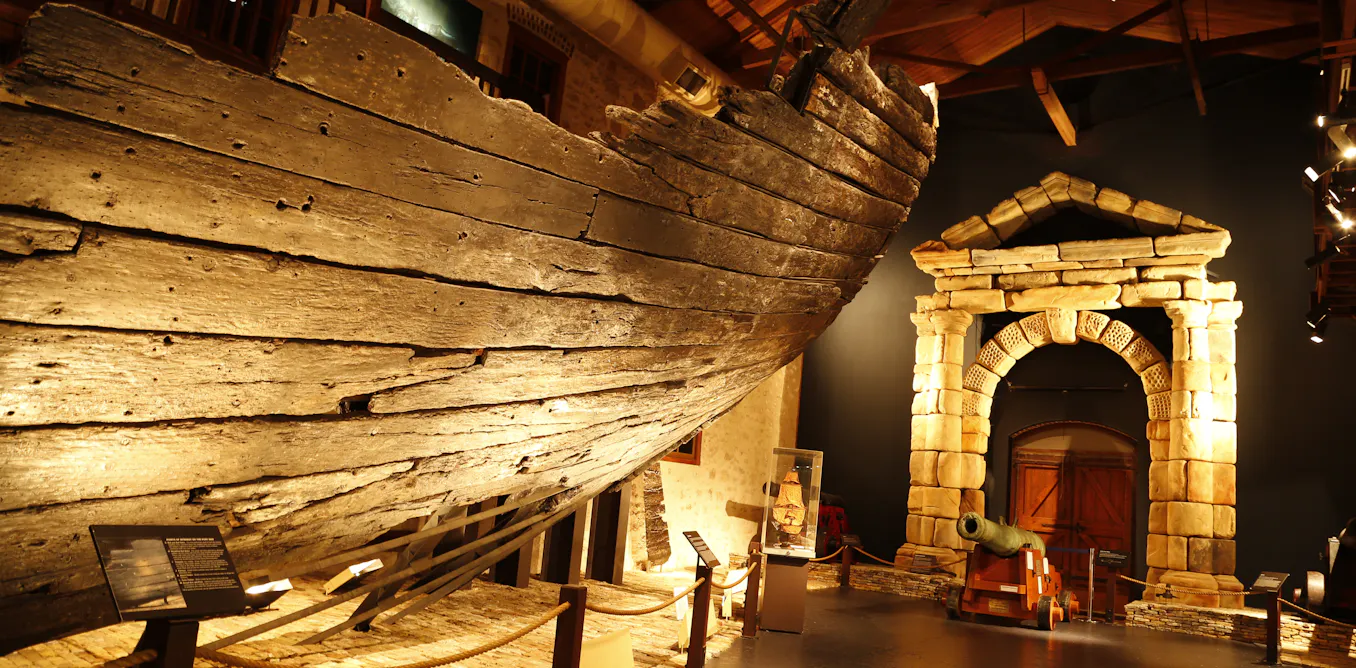
Tiny crystals recovered from the wreck of the 17th-century Dutch East India Company ship Batavia are offering new insights into global supply chains during the early days of capitalism. The study, published recently, analyzes the composition of these crystals to reconstruct aspects of the ship's journey and the trade routes it traversed. These findings demonstrate how material artifacts can serve as historical records, providing a tangible link to past economic activities. The Batavia, which sank off the coast of Western Australia in 1629 on its maiden voyage, was carrying a vast treasure of trade goods. The analysis of the crystals from its cargo allows historians and scientists to piece together the complex network of production and distribution that characterized the burgeoning global economy of the era. This research highlights the potential of archaeological discoveries to illuminate historical narratives and economic structures that were previously only understood through written records. The secrets held within these ancient crystals offer a unique perspective on the dawn of modern global commerce.
The study of crystals from the Batavia shipwreck offers a novel method for reconstructing historical trade networks, moving beyond traditional textual analysis. By examining the material composition of artifacts, researchers can gain objective insights into the origins and movements of goods, providing a more granular understanding of early global supply chains. This approach can help to deconstruct simplistic narratives of historical trade and highlight the complex logistical and economic systems at play. Looking ahead, similar material science techniques could be applied to other historical sites and artifacts, potentially revealing previously unknown patterns of resource extraction, manufacturing, and exchange in the pre-industrial and early industrial eras. This offers a powerful tool for understanding the long-term evolution of global economic interdependence.
AI-generated to prompt reflection — not editorial opinion, not advice, not a statement of fact. How this works.