Sick Ants Crave Caffeine, Healthy Ones Avoid It
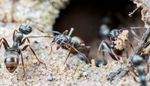
Healthy ants typically steer clear of caffeine, but research indicates that ants infected with a specific fungus exhibit a strong attraction to it. This behavior was observed in experiments where ants were presented with a choice between sugar water containing caffeine and plain sugar water. While healthy ants consistently chose the plain sugar water, infected ants showed a preference for the caffeinated solution. Scientists hypothesize that the fungus may manipulate the ants' behavior to facilitate its own spread. By making the ants more active and potentially more mobile due to the stimulant effect of caffeine, the fungus could increase its chances of being dispersed to new hosts. This interaction highlights a complex relationship between host, parasite, and environment, where the parasite actively alters the host's perception and behavior for its own reproductive advantage. Further research is needed to fully understand the biochemical mechanisms behind this phenomenon and its implications for ant colony health and fungal transmission dynamics.
This finding suggests a fascinating example of parasite-induced behavioral manipulation, where a fungus appears to exploit the physiological effects of caffeine to enhance its own propagation. The observed divergence in ant preference based on infection status points to a potential evolutionary arms race between the ants and the fungus. From a systems perspective, this highlights how external biological agents can override innate host behaviors, raising questions about the resilience of social insect colonies to such targeted manipulation. Understanding the specific neurochemical pathways affected by the fungus could offer insights into broader principles of host-parasite interactions and the potential for novel pest control strategies that disrupt such symbiotic manipulations.
AI-generated to prompt reflection — not editorial opinion, not advice, not a statement of fact. How this works.