Siemens AG's Final MPEG-4 Visual Patent Expires, Making Standard Patent-Free
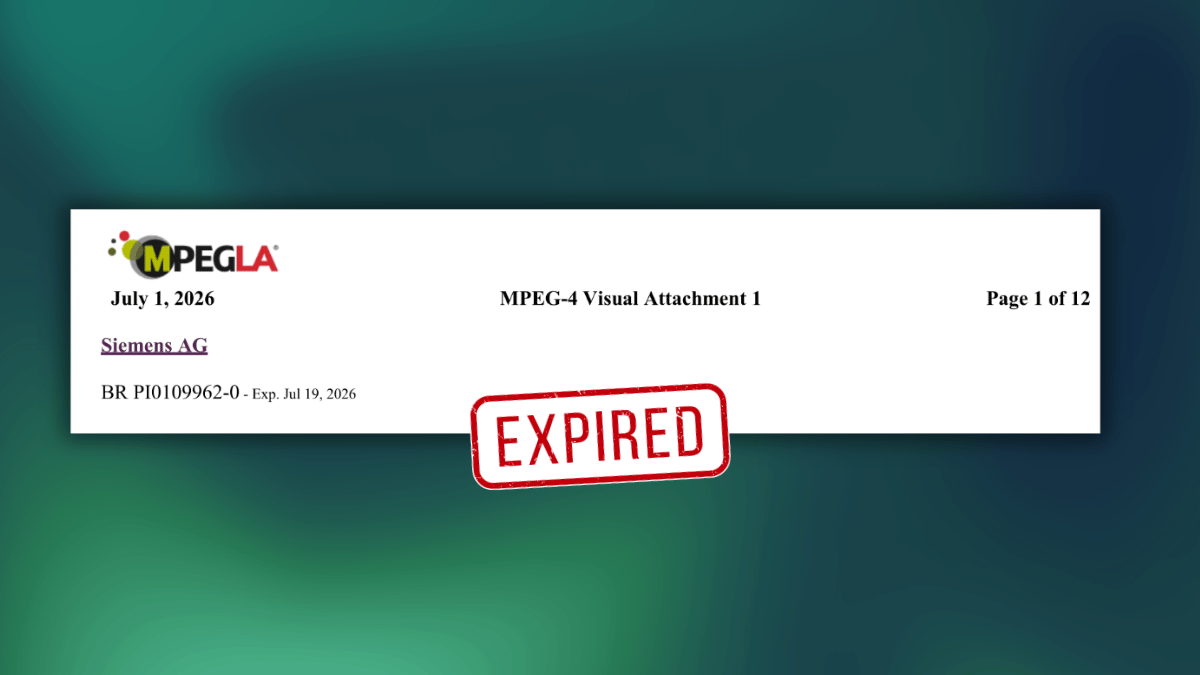
The MPEG-4 Visual standard has officially become patent-free following the expiration of the last remaining patent. This final patent, held by Siemens AG, was active in Brazil and expired on July 19, 2026. The expiration marks a significant milestone for the widely used video compression technology. MPEG-4 Visual, also known as H.264 or AVC (Advanced Video Coding), has been a cornerstone of digital video for many years, enabling efficient video streaming and storage across various platforms. Its journey to becoming patent-free involved the gradual expiry of numerous patents held by different entities worldwide. Siemens AG's patent was the last hurdle to achieving this status. The transition to a patent-free standard is expected to foster further innovation and broader adoption of MPEG-4 Visual technology. It removes licensing barriers that could have previously hindered development or increased costs for implementers. This move is particularly beneficial for content creators, streaming services, and device manufacturers who rely on efficient video encoding.
The expiration of the final patent for the MPEG-4 Visual standard, specifically Siemens AG's patent in Brazil on July 19, 2026, signifies a crucial shift towards open access in digital video technology. This event removes potential licensing encumbrances, which could stimulate further innovation and reduce implementation costs for a technology that has been fundamental to video compression. From a systems perspective, the transition to patent-free status for widely adopted standards like MPEG-4 Visual aligns with broader technological trends favoring open-source and accessible frameworks. This development may encourage the exploration of new applications and enhancements, particularly as the demand for high-quality video content continues to grow exponentially in the coming decade. It also highlights the dynamic lifecycle of intellectual property in rapidly evolving technological landscapes, where patents eventually mature into public domain assets.
AI-generated to prompt reflection — not editorial opinion, not advice, not a statement of fact. How this works.