Simone Tebet Declines Future Ministerial Role if Lula Wins Re-election
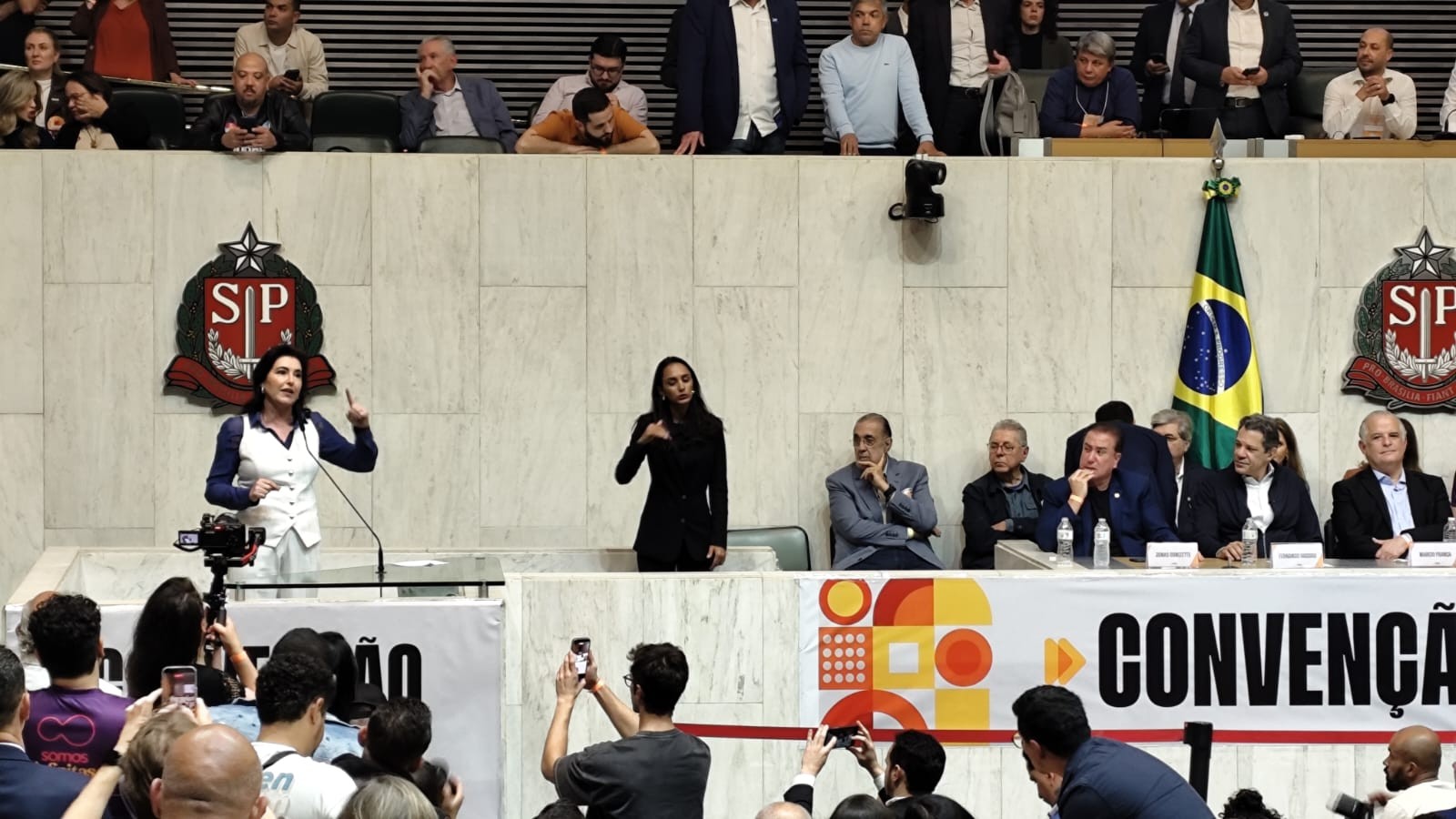
Simone Tebet, currently a candidate for Senator from São Paulo, has stated she has no interest in serving as a minister again should Luiz Inácio Lula da Silva be re-elected as President of Brazil. Tebet, who was a presidential candidate in 2022 and played a key role in the second round of that election, previously held the position of Minister of Budget and Planning in the current administration. She resigned from this post in April to pursue her Senate candidacy. Tebet is part of a slate that includes Fernando Haddad (PT) for governor of São Paulo, with Márcio França (PSB) as the vice-governor, and Marina Silva (Rede) for the other Senate seat. All of these individuals previously served as ministers in the current government. Consequently, parties within Lula's allied base have been vying for the substitute positions for Tebet and Marina's Senate candidacies. Tebet made these remarks upon arriving at her party's state convention at the Legislative Assembly of São Paulo State (Alesp). Regarding the definition of the substitute roles, she indicated that she has delegated the decision to the party's National Executive. She mentioned that, in principle, the PT would hold the first substitute position and the PDT the second, as she is not directly involved in these negotiations. Tebet expressed confidence in the proposed candidates for the substitute roles, describing them as individuals of "impeccable reputation and experience." She also stated her intention, if elected, to serve a full eight-year term in the Federal Senate, provided she remains in good health. Potential candidates for the substitute positions include Antonio Jorge (PDT), Marcelo Barbieri (PDT), Djalma Nery (PSOL), and Roberto Tripoli (PV).
Simone Tebet's declaration signals a strategic positioning for her political future, potentially aiming to establish independence from executive power and focus on legislative influence. By ruling out a return to a ministerial role, she may be seeking to build a distinct political brand, emphasizing long-term legislative engagement over the cyclical nature of executive appointments. This move could be interpreted as a bid to consolidate her base and prepare for future leadership aspirations, leveraging her experience as a former minister and presidential candidate. Her focus on an eight-year Senate term suggests a commitment to institutional building and policy development within the legislative branch, offering a contrast to the immediate demands of ministerial portfolios. This approach aligns with a broader trend of politicians seeking to define their roles beyond traditional party lines and executive patronage.
AI-generated to prompt reflection — not editorial opinion, not advice, not a statement of fact. How this works.