Simple 3D Printer Cover Uses Paper, Not Printing
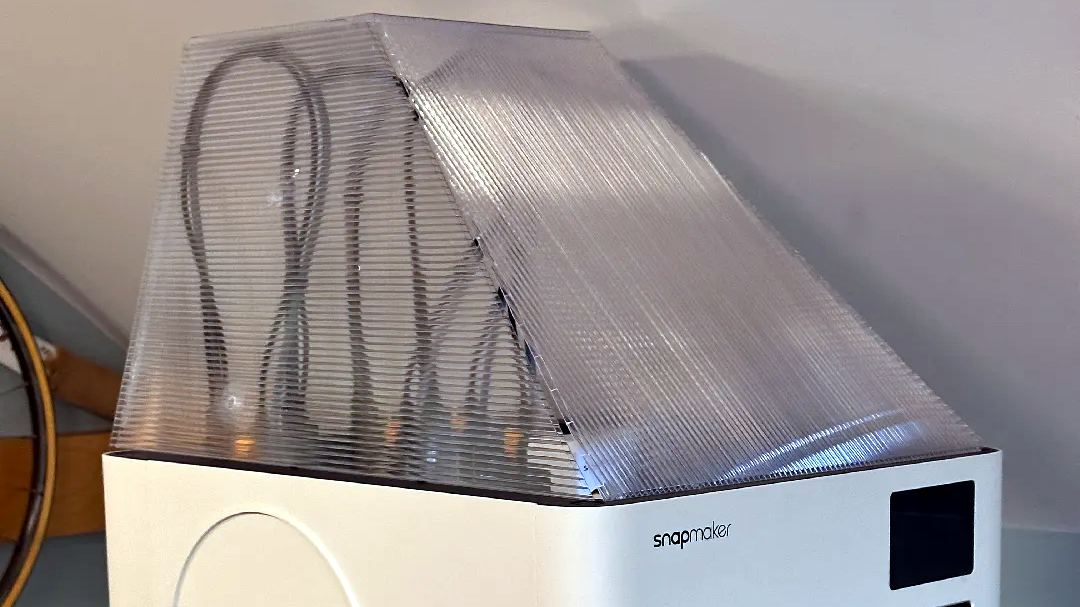
A new top cover design for the Snapmaker U1 3D printer, created by [cmh], does not involve any 3D printing despite its 3D model availability. Instead of additive manufacturing, the project utilizes a straightforward paper-based construction method. Users can cut and fold the provided template to create the cover. This approach offers an accessible and potentially more sustainable alternative to traditional plastic 3D printed enclosures. The design emphasizes simplicity and ease of assembly, making it suitable for users without extensive 3D printing experience or equipment. The project highlights innovative uses of readily available materials for functional object creation.
This project demonstrates an innovative approach to product design by leveraging readily available materials like paper for a functional component, challenging the conventional reliance on 3D printing for custom enclosures. It highlights a potential shift towards more sustainable and accessible manufacturing methods, reducing material waste and energy consumption associated with traditional 3D printing. The design's simplicity suggests a broader trend of democratizing product creation, allowing individuals with minimal technical skills to assemble functional items. This could lead to new business models focused on printable templates and low-resource manufacturing solutions, especially as digital fabrication technologies continue to evolve.
AI-generated to prompt reflection — not editorial opinion, not advice, not a statement of fact. How this works.