Simulating Neurochemistry to Create More Believable AI Bots
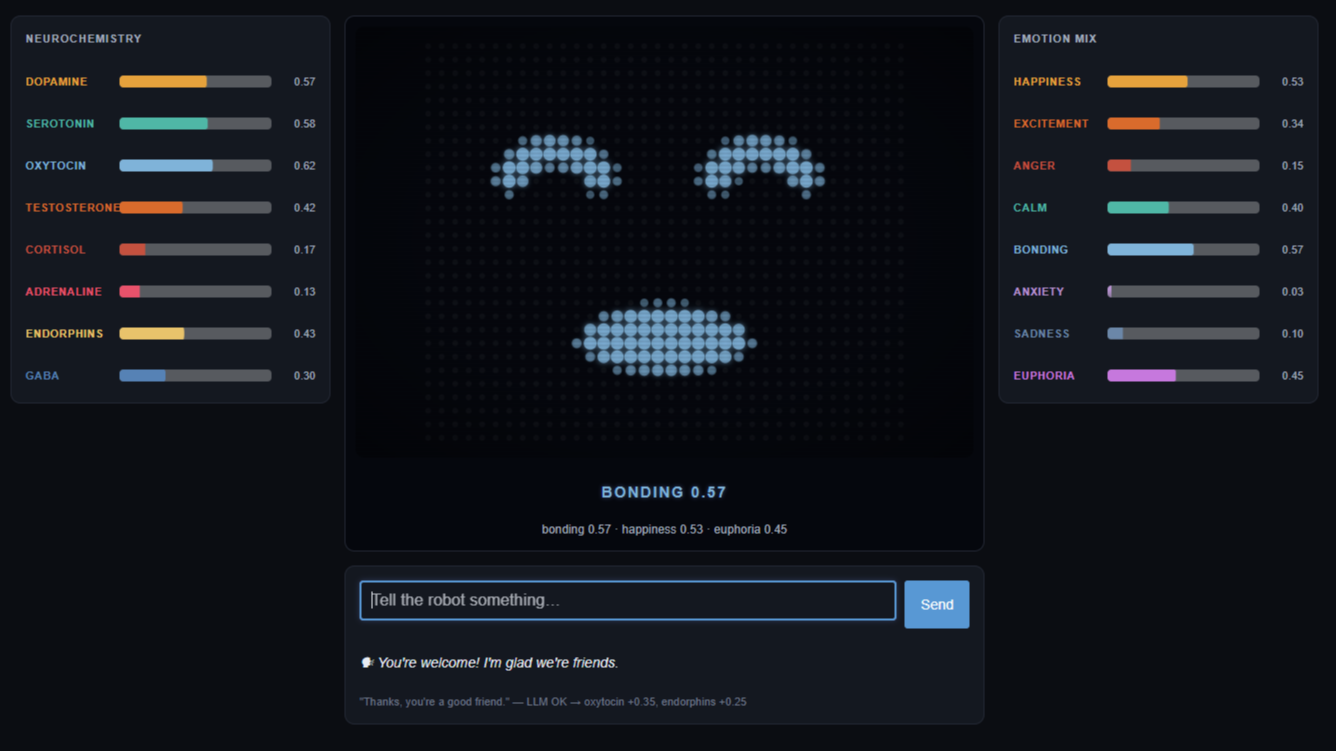
Drew Smith proposes a novel approach to enhance the believability of AI bots by simulating their neurochemistry. This method aims to equip machines with the capacity for nonverbal communication, moving beyond simple text-based interactions or basic emojis. Smith's work suggests that by modeling the underlying chemical processes that influence emotions and reactions in biological systems, AI can achieve more nuanced and human-like expressions. This could lead to more engaging and realistic interactions between humans and artificial intelligence. The potential applications range from improved virtual assistants and customer service bots to more sophisticated characters in gaming and virtual reality environments. The core idea is to imbue AI with a simulated internal state that drives its external behavior, making it appear more authentic and responsive. This approach could be a significant step towards creating AI that can better understand and mirror human social cues and emotional intelligence.
AI's pursuit of enhanced realism through simulated neurochemistry highlights a fundamental challenge in artificial intelligence development: replicating the complexity of human consciousness and emotion. While modeling internal states can improve bot believability and user experience, it raises questions about the ethical implications of creating increasingly sophisticated artificial agents. As AI systems become more adept at mimicking human behavior, distinguishing between genuine interaction and programmed response may become more difficult, impacting trust and authenticity in digital communications. Future developments will likely focus on balancing functional realism with transparency about the AI's nature, ensuring users understand they are interacting with a machine, regardless of its simulated emotional depth.
AI-generated to prompt reflection — not editorial opinion, not advice, not a statement of fact. How this works.