Singapore Beekeeper Rescues Millions of Bees by Hand
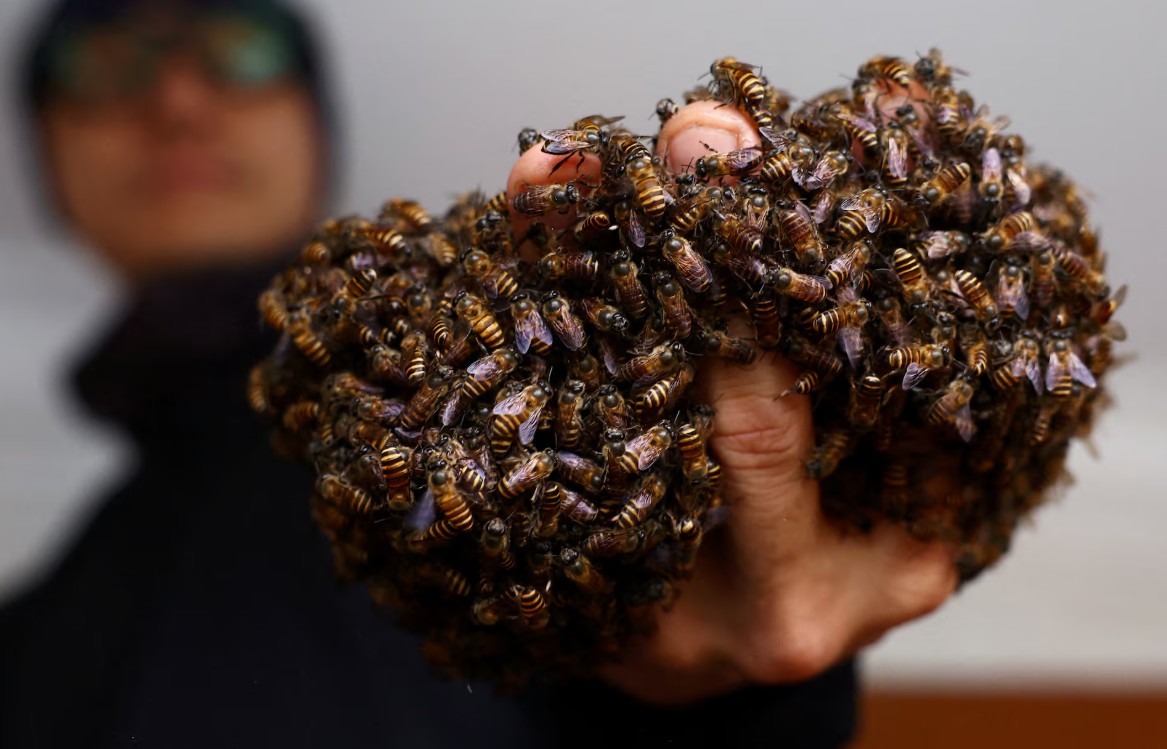
Clarence Chua, a 42-year-old bee rescuer in Singapore, has saved approximately 6 million bees over the past six years by relocating them from homes and businesses. Unlike pest control companies that exterminate hives for S$80-S$150, Chua charges S$100-S$500 to humanely remove entire colonies, including the queen, larvae, and workers. He then transports these bees to one of his three apiaries, one of which is located in his own backyard. Chua's dedication stems from a deep respect for bees, noting that they remain calm if not threatened. He has rescued bees from unusual locations, including a spiritual worship house and an airplane engine, preventing flight departures. His efforts have gained traction, with municipal councils increasingly hiring him to manage bee populations in public housing estates, where nearly 80% of Singapore's population resides. Despite the risks, including a past incident where he was stung about 100 times while attempting a rescue, Chua emphasizes the importance of understanding bee behavior before approaching them. He often assesses hives without protective gear initially, donning it only if the swarm appears agitated. Chua also leverages social media, sharing videos of his work, some recorded with Meta smart glasses, to educate and attract followers, who now number around 20,000. He highlights the critical role of bees in agriculture, stating that their absence would lead to significantly less fruit and higher prices, impacting global food security.
This narrative highlights an individual's initiative in addressing a common urban-wildlife conflict, offering a sustainable alternative to traditional pest control. The economic model employed by Clarence Chua demonstrates a market opportunity for specialized ecological services, balancing conservation with a fee-based structure. From a systems perspective, the increasing engagement with municipal bodies suggests a growing recognition of the ecological and economic value of pollinators, potentially influencing urban planning and pest management policies. The inherent risks involved underscore the need for robust safety protocols and public education regarding wildlife interaction. Looking ahead, the success of such localized conservation efforts, amplified by digital platforms, could serve as a blueprint for similar initiatives in other urban environments facing biodiversity challenges, particularly in the context of global pollinator decline and its implications for food systems.
AI-generated to prompt reflection — not editorial opinion, not advice, not a statement of fact. How this works.