Six Candidates Vie for UN Secretary-General Post as Guterres' Term Ends
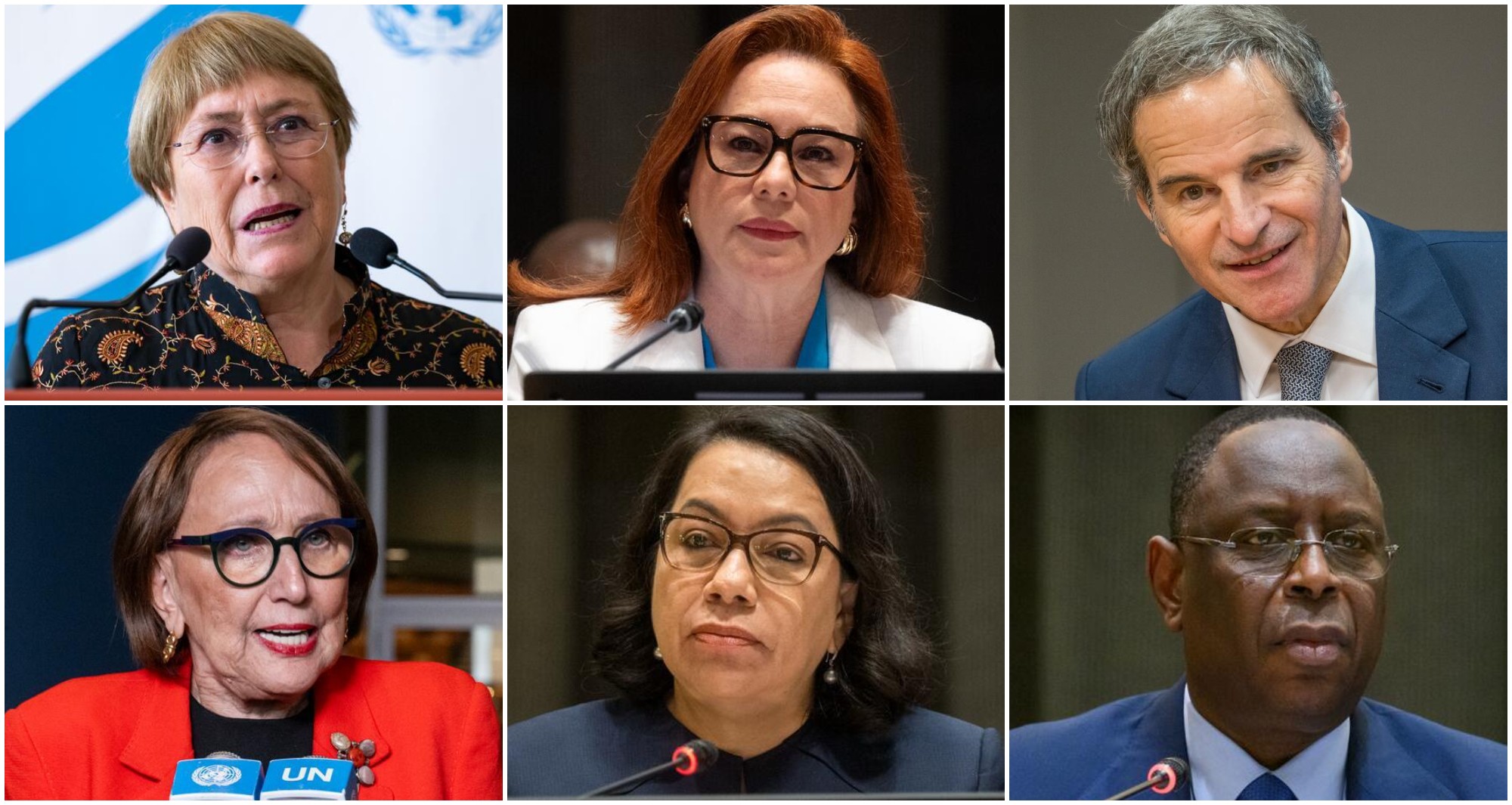
Six candidates are vying to succeed António Guterres as the next Secretary-General of the United Nations, with Guterres' second and final term concluding on December 31, 2026. The United Nations is holding a public debate on Thursday, June 23, at its New York headquarters, which will be broadcast live. The candidates include Michelle Bachelet of Chile, María Fernanda Espinosa of Ecuador, Rafael Grossi of Argentina, Rebeca Grynspan of Costa Rica, Carolyn Rodrigues Birkett of Guyana, and Macky Sall of Senegal. This selection occurs during a critical period for the UN, marked by escalating international conflicts, violations of international law, and a significant financial crisis, including approximately $4 billion in overdue payments from the United States. The selection process begins in the Security Council, where the five permanent members (United States, China, Russia, France, and the United Kingdom) hold veto power, before a final nomination by the General Assembly. Latin America has strong representation with three candidates: Bachelet, Grossi, and Grynspan, each bringing distinct platforms. Bachelet advocates for stronger human rights defense, Grossi emphasizes his experience with international crises and administrative reform, and Grynspan calls for a more audacious UN and a representative Security Council. Macky Sall of Senegal brings political experience and advocates for greater African representation, while Carolyn Rodrigues-Birkett of Guyana champions multilateralism and an efficient UN. Brazil and Mexico have declared support for Michelle Bachelet. The process has become more transparent since 2016, with public debates and published candidacies, although the ultimate decision rests with the Security Council's permanent members.
The selection process for the UN Secretary-General, while increasingly transparent with public debates, remains heavily influenced by the veto power of the five permanent Security Council members. This dynamic highlights a persistent tension between the aspiration for broad international representation and the geopolitical realities of global governance. The significant financial challenges facing the UN, including substantial arrears from major contributors, underscore the need for a leader capable of navigating complex diplomatic and economic landscapes. Future leaders will likely need to balance the demands of member states with the organization's core mission, potentially requiring innovative funding models and a strengthened mandate to address global crises effectively in an era of shifting power balances and emerging technological challenges.
AI-generated to prompt reflection — not editorial opinion, not advice, not a statement of fact. How this works.