Six friends embark on a 12-day monsoon trek through remote Bangladeshi hills
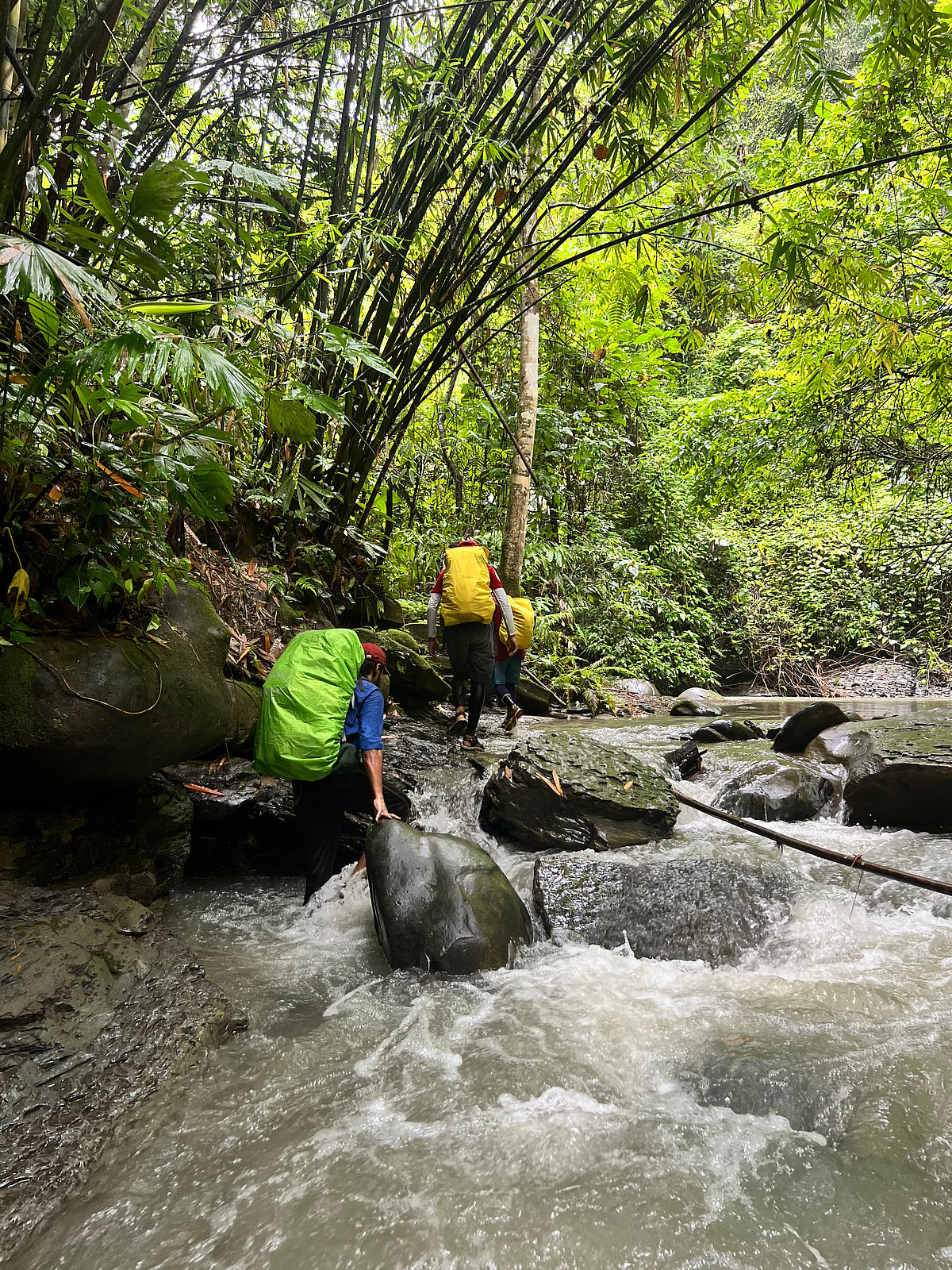
Six friends undertook a challenging 12-day expedition into the remote hills of Bangladesh during the monsoon season, seeking adventure and a close encounter with nature. Their journey, recounted by trekker Tareq Ibn Alam, was driven by a desire to experience the mountains, streams, and isolated hill villages during the rainy season. The group began their trek from Alikadam, heading towards the Khumi community's Mangluang Headmanpara after a five to six-hour hike on slippery, ascending trails. Initially planning to camp further, they were forced to seek shelter in a village school due to a sudden flash flood caused by heavy rain. The following day, they continued their trek along the Khola Jiri stream, encountering the small Buno Khola waterfall where they stopped for lunch. Navigating through the Khola Jiri, Tindu Jiri, and Sengsang Jiri streams, they reached Paring Para by 4 PM, surrounded by the lush green expanse of the Chimbuk mountain range and the flowing Mino Jiri stream amidst clouds, fog, and persistent rain. They found accommodation with a local family in their traditional Machang house, paying 200 Taka per person daily for lodging. Despite the ongoing rain, they prepared dinner using ingredients they brought, supplemented by locally purchased rice (100 Taka per kg) and a country chicken weighing nearly 3 kg for 1000 Taka. Fresh bamboo shoots provided by their host family were also part of the meal. Lacking tents due to the monsoon, they slept in sleeping bags on the wooden floor of the Machang house, observing the local custom of using logs as pillows. The next morning, they set out to visit the Oisaw and Temthumu waterfalls, a journey made significantly more difficult by the monsoon's strong currents, forcing them to forge their own paths along the hillsides. Upon returning to Paring Para, they found the surrounding paths submerged by the continuous rain, leading to a four-day unexpected stay in the village as local guides deemed river crossings too dangerous. During this enforced pause, they spent time interacting with the villagers, learning about the local geography, waterfalls, and trekking routes, including potential winter trails and paths via Kirsatang. On the fifth morning, as the rain finally subsided, they prepared to head towards Langlok waterfall, one of Bangladesh's highest.
This narrative highlights the allure of adventure tourism in challenging natural environments, particularly during the monsoon season in Bangladesh's remote hill districts. The expedition underscores the significant logistical and safety considerations inherent in such treks, including unpredictable weather patterns, flash floods, and the need for local guidance. The experience also offers a glimpse into the cultural exchange and economic interactions between visitors and indigenous communities, with the trekkers engaging in local customs and contributing financially through accommodation and food purchases. The extended stay due to adverse weather illustrates the delicate balance between human endeavor and the power of nature, prompting reflection on preparedness and adaptability in expedition planning. Future considerations for similar ventures might involve enhanced risk assessment protocols, more robust communication systems, and deeper engagement with local communities to foster sustainable tourism practices that respect both the environment and local livelihoods.
AI-generated to prompt reflection — not editorial opinion, not advice, not a statement of fact. How this works.