Six Japanese Words Adopted into Brazilian Portuguese Vocabulary
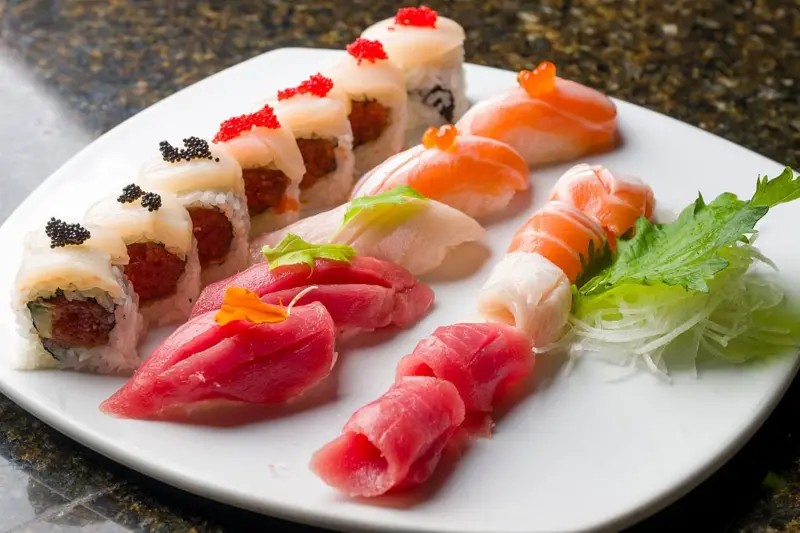
Several words of Japanese origin have been integrated into Brazilian Portuguese, some with obvious connections like 'sushi' and 'karatê,' while others are less apparent. This article highlights six terms that Brazilians commonly use without realizing their Japanese roots.
The first word is 'soja' (soybean), a crucial agricultural product for Brazil, which is the world's largest producer. The word 'soja' itself originates from the Japanese 'shoyu.' Soybeans are versatile, used for producing milk, cheese, cooking oil, biodiesel, and animal feed.
'Tsunami,' meaning 'harbor wave' in Japanese ('tsu' for harbor, 'nami' for wave), describes large, fast-moving ocean waves often caused by seismic activity or volcanic eruptions. While the phenomenon isn't new, its global recognition and frequent use increased significantly following the devastating tsunamis of 2004 in the Indian Ocean and 2011 in Japan.
'Biombo,' a screen used to divide spaces, comes from the Japanese 'byōbu,' meaning 'protection from wind.' Beyond its literal use, 'biombo' can also refer figuratively to an action that conceals a flaw or damage.
'Emoji,' a small digital image or icon representing emotions, objects, or ideas in electronic communication, is derived from the Japanese 'e' (picture) and 'moji' (character).
'Futon,' a thin mattress typically used on traditional Japanese beds, also retains its Japanese name. These futons are usually about 5cm high and filled with cotton, wool, or synthetic materials.
Finally, 'karaokê' (karaoke), meaning 'empty orchestra' in Japanese, refers to the popular activity where amateur singers perform along to pre-recorded instrumental music.
The integration of foreign words into a language reflects cultural exchange and evolving communication needs. The adoption of Japanese terms like 'soja,' 'tsunami,' 'biombo,' 'emoji,' 'futon,' and 'karaokê' into Brazilian Portuguese highlights historical connections, globalized media, and technological advancements. The analysis of 'tsunami' usage, for instance, shows how catastrophic events can elevate a word's prominence in global discourse. Similarly, the inclusion of 'emoji' underscores the digital transformation of communication. Understanding these linguistic adoptions provides insight into societal trends and the dynamic nature of language in a connected world, prompting reflection on how future technological and cultural shifts will continue to shape vocabulary.
AI-generated to prompt reflection — not editorial opinion, not advice, not a statement of fact. How this works.