Six-Year-Old Boy Follows Father's Footsteps in Breakdancing in São Paulo Interior
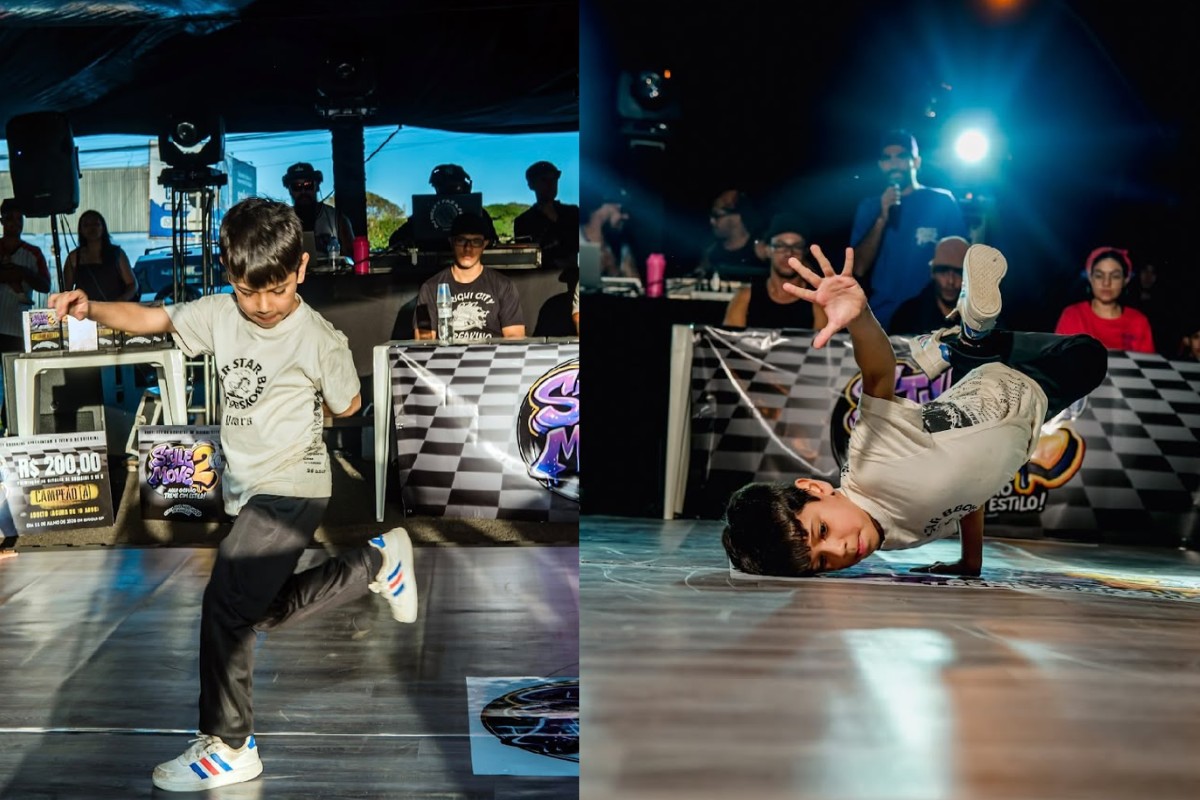
A six-year-old boy named Bernardo de Souza Pereira is making a name for himself in breakdancing, following in the footsteps of his father, Fernando Henrique Pereira, a street dance professor who performed at the Rio 2016 Olympics. Bernardo, who has four years of experience despite his young age, began accompanying his father to rehearsals at just two years old. He recently won first place in the children's category at a dance battle in Birigui, São Paulo, in June. His passion for breaking mirrors his father's journey, who found urban dance transformative in his own childhood and achieved international recognition. Fernando Henrique Pereira, originally from Adamantina, São Paulo, describes himself as a hyperactive child who found an outlet and a life-changing passion in dance. He is proud to see his son following his path. Breakdancing, originating in the United States in the 1970s, is characterized by acrobatic movements, stylized footwork, and the crucial roles of the DJ and MC. It became an Olympic sport in 2018, debuting at the Youth Olympic Games in Buenos Aires. Bernardo trains four times a week under his father's guidance, balancing dance with school, swimming, and soccer. His father notes Bernardo's high energy and adventurous spirit, which align well with the demands of breakdancing. The family, including his mother Ritiele and younger sister Ísis, fully supports Bernardo's pursuit, emphasizing that his participation must be enjoyable. Bernardo is set to compete again in September in Penápolis, São Paulo.
This story highlights the intergenerational transmission of passion and skill within a family, specifically in the context of breakdancing. The narrative frames Bernardo's talent as a natural progression from his father's career, emphasizing shared energy and interest. From a systemic perspective, the increasing professionalization and Olympic inclusion of breakdancing provide new avenues for talent development and recognition, potentially creating structured career paths for young artists. However, the emphasis on early specialization and intense training, even when framed as enjoyable, raises questions about the long-term sustainability of such demanding physical activities for children. Future considerations for breakdancing as an Olympic sport will likely involve balancing its cultural roots with its athletic demands, ensuring athlete well-being, and navigating the evolving landscape of youth sports development in an increasingly competitive global environment.
AI-generated to prompt reflection — not editorial opinion, not advice, not a statement of fact. How this works.