Skopje Launches Artisan Subsidy Program to Preserve City's Authenticity
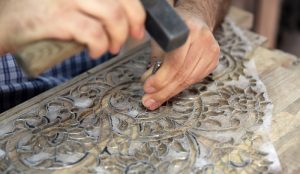
The City of Skopje has announced a public call for subsidies aimed at supporting artisans whose trades are experiencing a continuous decline. This initiative seeks to preserve the authentic character of Skopje by revitalizing these diminishing crafts. Eligible participants must reside within the ten municipalities of Skopje: Aerodrom, Gazi Baba, Butel, Chair, Gjorche Petrov, Karposh, Kisela Voda, Saraj, Centar, and Shuto Orizari. The program is designed to assist artisans facing challenges due to the decreasing popularity or viability of their traditional skills. By offering financial support, the city hopes to encourage the continuation and development of these essential crafts. The goal is to ensure that the unique heritage represented by these artisans is not lost to future generations. Further details on the application process and specific criteria are expected to be made available. This program represents a proactive step by the city administration to address the erosion of traditional trades. It underscores a recognition of the cultural and economic value these artisans bring to Skopje. The initiative aims to foster a sustainable environment for these crafts to thrive.
The City of Skopje's initiative to subsidize declining artisan trades reflects a common urban challenge: balancing modernization with the preservation of cultural heritage. By offering financial incentives, the city aims to counteract market forces that favor mass production and newer industries, thereby safeguarding a unique aspect of its identity. This approach highlights a potential tension between economic efficiency and cultural continuity. The program's success will likely depend on its design, the level of funding, and its ability to attract and retain artisans in the long term, especially as younger generations may be drawn to more lucrative or contemporary professions. Evaluating the program's impact over the next decade will reveal whether such interventions can effectively create sustainable economic models for traditional crafts in an increasingly globalized and digitized world.
AI-generated to prompt reflection — not editorial opinion, not advice, not a statement of fact. How this works.