Slovakia's Economic Stagnation: "Tatras Tiger" Fades, Needs "Carpathian Wolf" Approach
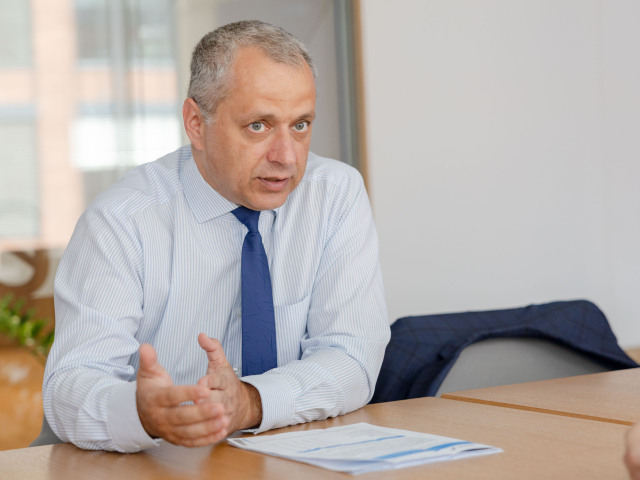
Respected economist Martin Šuster, a member of the Budgetary Responsibility Council (RRZ), stated that Slovakia is no longer converging with Western living standards. Instead, both the Czech Republic and Poland are moving further away from Slovakia. The Slovak economy has grown by less than one percent for two consecutive years, leading to stagnant real wages and a potential slight increase in unemployment. Šuster argues that external factors like wars, high energy prices, and Europe's weak economic performance are not the sole culprits. He points to domestic economic policy as a significant impediment, which has focused for years on redistributing existing wealth rather than on expanding the overall economic pie. This shift in focus is hindering the country's progress and its ability to catch up with more prosperous nations.
Slovakia's economic trajectory, characterized by sub-one-percent growth and stagnant real wages, suggests a divergence from its regional peers like the Czech Republic and Poland. The critique of economic policy, shifting from wealth creation to redistribution, highlights a common governance challenge. Nations often face a trade-off between immediate social equity through redistribution and long-term prosperity via investment and growth. Over-reliance on redistribution without commensurate wealth generation can stifle innovation and capital accumulation, potentially leading to the observed economic slowdown. As the global economy navigates technological shifts and geopolitical uncertainties, Slovakia's policy choices will determine its capacity to foster sustainable growth and improve living standards in the coming decade. A balanced approach, integrating targeted redistribution with robust strategies for economic expansion and competitiveness, will be crucial.
AI-generated to prompt reflection — not editorial opinion, not advice, not a statement of fact. How this works.