Small plane crashes near Campo Grande, killing pilot and German researcher
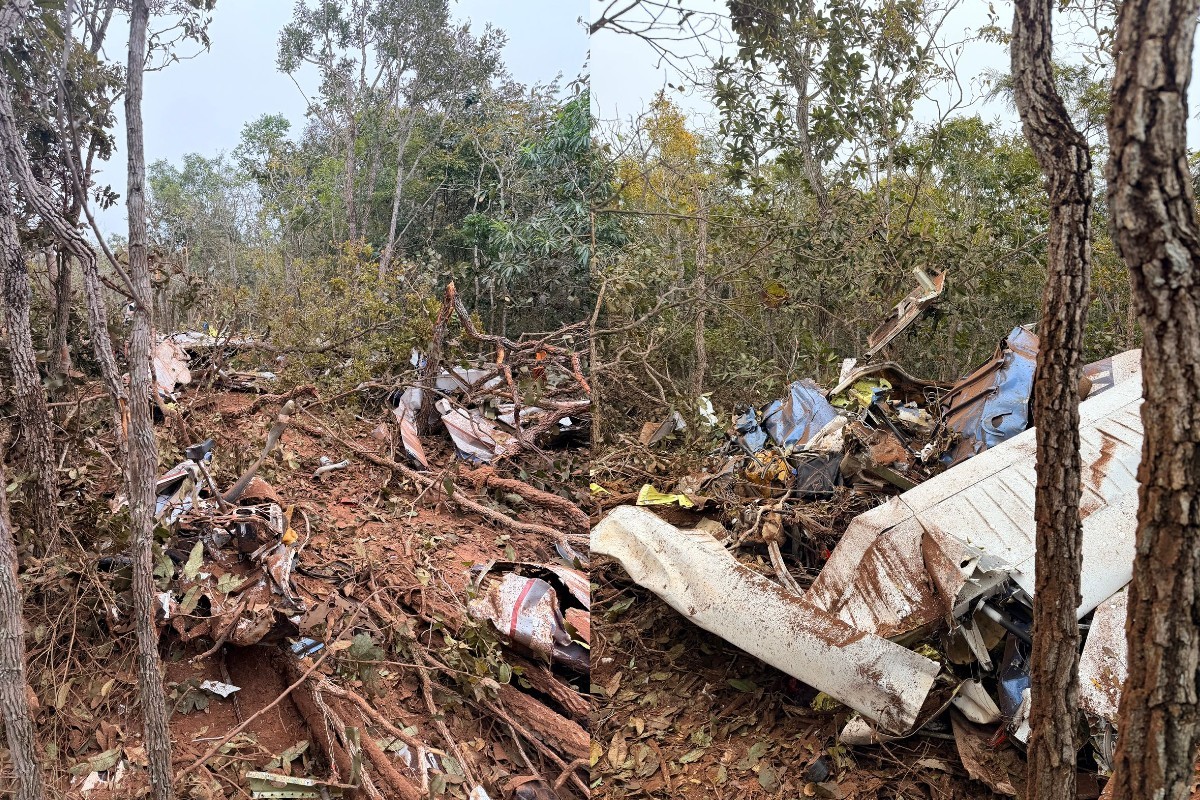
A small twin-engine EMB-810D aircraft operated by Amapil Táxi Aéreo crashed shortly after takeoff near Campo Grande, Mato Grosso do Sul, on Friday morning, June 3rd. The plane was en route to the Pantanal region for fieldwork. Both occupants, pilot Henrique Martin and German zoologist Lydia Theresia Möcklinghoff, died at the scene. Martin had been a pilot since 2019, while Möcklinghoff was a renowned ecologist and scientific journalist specializing in the behavior of giant anteaters in the Pantanal, with extensive research experience in the area since the late 2000s. Her books on the local fauna were found intact among the wreckage. The primary hypothesis for the crash, being investigated by Civil Police, points to severe fog conditions that may have caused spatial disorientation for the pilot during an attempted landing. The Technical Investigation and Prevention Center for Aeronautical Accidents (Cenipa) will conduct the technical investigation, expected to arrive on Saturday, June 4th. Rescue teams faced significant challenges reaching the crash site due to poor road conditions. Official information regarding the pilot's wake has not been released, and the German Consulate in São Paulo is awaiting official reports to contact Möcklinghoff's family in Europe.
The tragic loss of life in this aviation incident underscores the inherent risks associated with small aircraft operations, particularly in challenging weather conditions. The investigation will likely focus on the interplay between pilot decision-making, environmental factors like fog, and the aircraft's operational status. Understanding the spatial disorientation risk in low visibility is crucial for improving pilot training and operational protocols in similar environments. Future advancements in aviation technology, such as enhanced navigation systems and real-time weather monitoring, could significantly mitigate such risks, promoting safer exploration and research in ecologically vital areas like the Pantanal.
AI-generated to prompt reflection — not editorial opinion, not advice, not a statement of fact. How this works.