Smart Bike Rack from Enschede Charges and Locks E-bikes Simultaneously
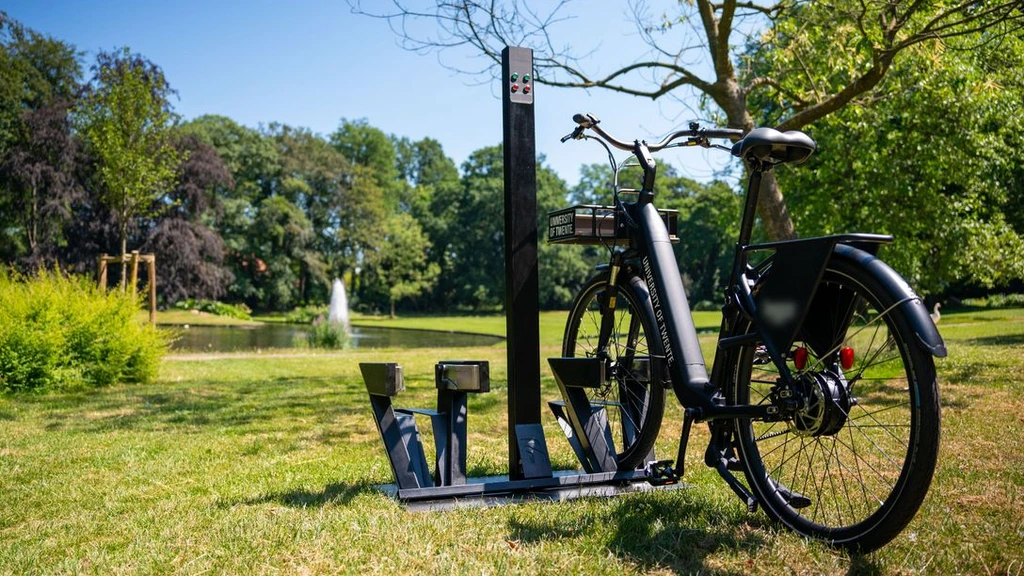
Two former University of Twente students, Paul Stöver and Maarten Smit, have developed "Lock and Load," a smart bicycle rack designed to charge and lock electric bikes in a single action. They founded the startup Revost to bring this innovation to market, aiming to encourage more people to adopt e-bikes by offering a sustainable and convenient solution. The system addresses the common inconvenience of users needing to carry and connect separate chargers for their e-bikes. The rack automatically locks and charges a bicycle once it is placed inside. A unique feature of the Lock and Load system is its compatibility with nearly all e-bike models, according to its creators. This is achieved by replacing the original axle nut with a specially designed one containing a charging contact and a locking mechanism. The University of Twente is currently conducting a pilot test with two bicycles and one rack over the next month to gather user feedback and refine the system. Stöver and Smit plan to begin sales in early 2027, initially targeting institutions like healthcare facilities, universities, and corporations that promote cycling among employees. Their long-term vision is to establish a nationwide network of these smart bike racks. While the specifics of electricity cost settlement are still being determined, the entrepreneurs have applied for a patent to protect their intellectual property and are exploring the possibility of obtaining a quality mark for their security system.
This innovation addresses a clear user pain point in the growing e-bike market by integrating charging and security. The system's success will depend on the cost-effectiveness of the modified axle nut and the seamless integration with existing e-bike infrastructure. Future considerations include developing a scalable model for electricity cost management and securing necessary certifications to build trust with consumers and institutions. As e-mobility expands, such integrated solutions could become standard, influencing urban planning and the design of public and private parking facilities, while also potentially creating new revenue streams for service providers.
AI-generated to prompt reflection — not editorial opinion, not advice, not a statement of fact. How this works.