Smithsonian Chief Rejects White House Claims of "Extreme Political Activism"
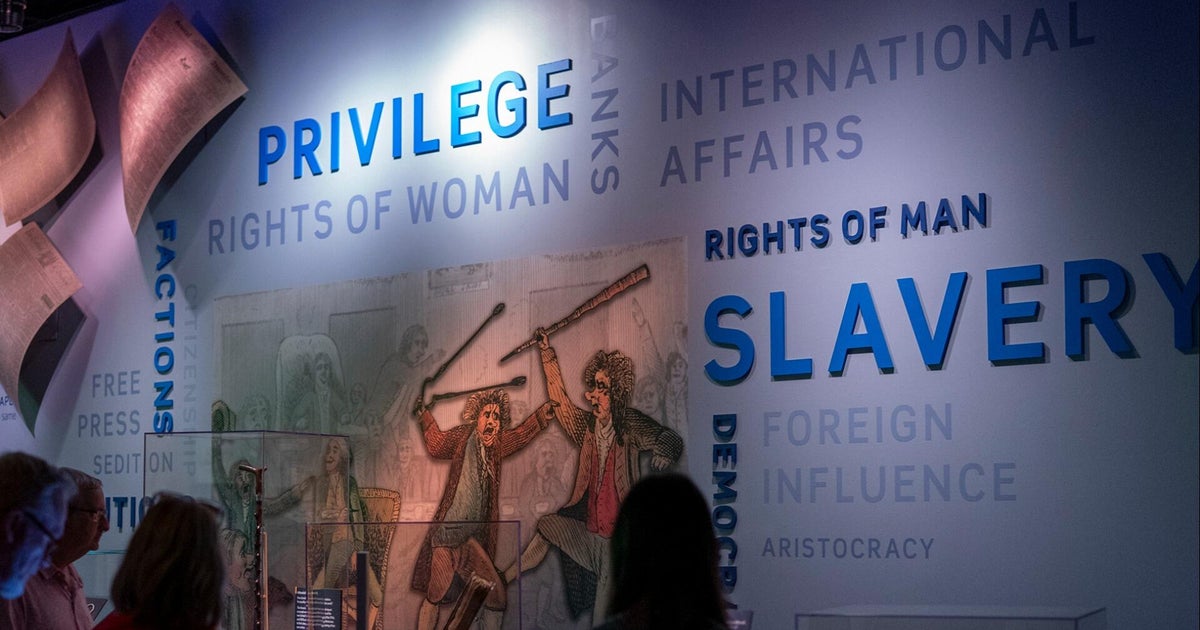
The Smithsonian Institution's top official has refuted a recent White House report that accuses the institution of exhibiting "extreme political activism" and displaying bias against white people in its historical interpretations. The report further alleges that the Smithsonian exhibits hostility towards white people in its handling of national history. In response, Philip Kennicott, a senior art and architecture critic at The Washington Post, penned an op-ed arguing that the White House itself suffers from a bias problem. Kennicott's piece suggests that the accusations leveled against the Smithsonian may reflect an issue within the reporting body itself. The White House report's findings have sparked debate regarding the institution's curatorial practices and its role in interpreting American history. The Smithsonian, a prominent complex of museums and research centers, is tasked with preserving and displaying artifacts and information central to the nation's past. The controversy highlights ongoing discussions about how historical institutions should navigate sensitive topics and diverse perspectives. Kennicott's commentary adds another layer to the discourse, questioning the objectivity of the White House's assessment.
This situation presents a clash between institutional mandates for historical interpretation and external political pressures. The White House report's accusations of "extreme political activism" and bias suggest a potential conflict over the Smithsonian's approach to presenting complex historical narratives, particularly those involving race and identity. The Smithsonian, by its nature, engages with evolving societal understandings of history, which can be perceived as activism by those holding more traditional viewpoints. The counter-argument, as presented by The Washington Post, posits that the accuser may be projecting its own biases. This dynamic raises questions about the influence of political administrations on cultural institutions and the potential for such institutions to become politicized. Moving forward, the Smithsonian, like many cultural bodies, will likely navigate the tension between maintaining academic integrity and responding to public and political expectations, a challenge amplified in an era of heightened cultural and political polarization.
AI-generated to prompt reflection — not editorial opinion, not advice, not a statement of fact. How this works.