Smithsonian Museum Director Defends Approach Amidst White House Criticism
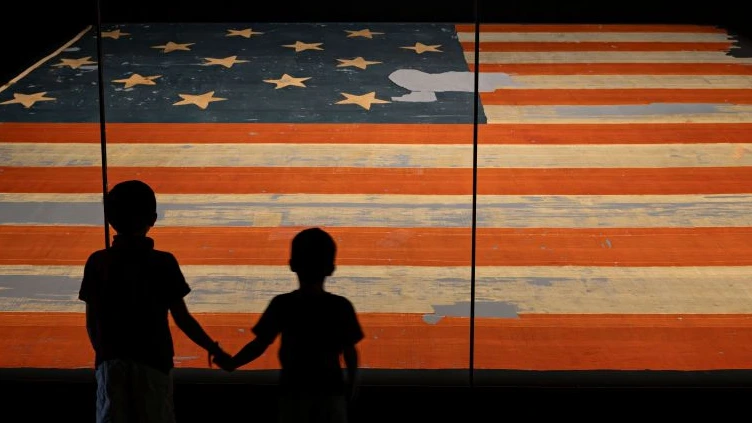
Anthea Hartig, director of the National Museum of American History, has refuted sharp criticism from the White House, which alleged the museum promotes "radical activists" and discourages patriotism. Hartig argued that love for one's country does not necessitate blind patriotism but can also be demonstrated by acknowledging the nation's less palatable historical aspects. Speaking to members of Congress on the 250th anniversary of the U.S., she addressed a report that characterized the prestigious Smithsonian Institution, under which her museum falls, as a left-wing bastion. The report specifically accused Hartig of promoting a 'woke' ideology that questions American pride by presenting the nation as founded by flawed men and defined by historical injustices like white supremacy, slavery, conquest, exclusion, racism, xenophobia, misogyny, and systemic injustice. Hartig countered that the report did not accurately represent the museum's work, emphasizing its commitment to presenting the full American narrative with research and precision. She stated the museum does not take political sides but aims to preserve and display the breadth of American life, allowing the public to draw their own conclusions. Hartig asserted that discussing moments where the country failed to live up to its ideals is not unpatriotic but rather a testament to respect for the American people and the ongoing pursuit of a 'more perfect union,' referencing the U.S. Constitution's opening words. Founded in 1846, the Smithsonian Institution has grown into a major tourist attraction, drawing 15 million visitors last year across its various sites. Hartig dismissed claims that beloved historical figures and national symbols are neglected, citing the prominent display of a Washington statue, Jefferson's writing desk, and the Star-Spangled Banner. She observed that visitors, particularly children, often display genuine patriotism organically when engaging with these artifacts. Democrats in Congress supported Hartig, with Representative Joe Morelle accusing President Trump of attempting to coerce a respected cultural institution into presenting a purely nationalistic success story and attempting to rewrite history. This confrontation aligns with President Trump's broader efforts to challenge diversity in American historical narratives, including altering texts at national parks and removing panels about Black WWII soldiers.
This event highlights a fundamental tension in how national history should be presented and interpreted, particularly in the context of evolving societal values and political discourse. The Smithsonian's approach, as defended by Director Hartig, emphasizes a comprehensive historical narrative that includes both triumphs and failures, aiming to foster a more nuanced understanding of national identity. Conversely, the White House criticism suggests a preference for a more curated, celebratory narrative, potentially overlooking or downplaying historical complexities. This dynamic reflects broader debates about 'wokeness' and historical revisionism, where differing perspectives on patriotism and national pride clash. The situation raises questions about the role of cultural institutions in shaping public memory and whether their mandate includes critically examining a nation's past or solely reinforcing established narratives. In the coming decade, as AI continues to influence information dissemination and historical analysis, the challenge for institutions like the Smithsonian will be to navigate these competing demands while maintaining academic integrity and public trust, ensuring that historical accounts are both accurate and relevant to contemporary audiences without succumbing to political pressure or ideological agendas.
AI-generated to prompt reflection — not editorial opinion, not advice, not a statement of fact. How this works.